
Last updated November 4, 2026
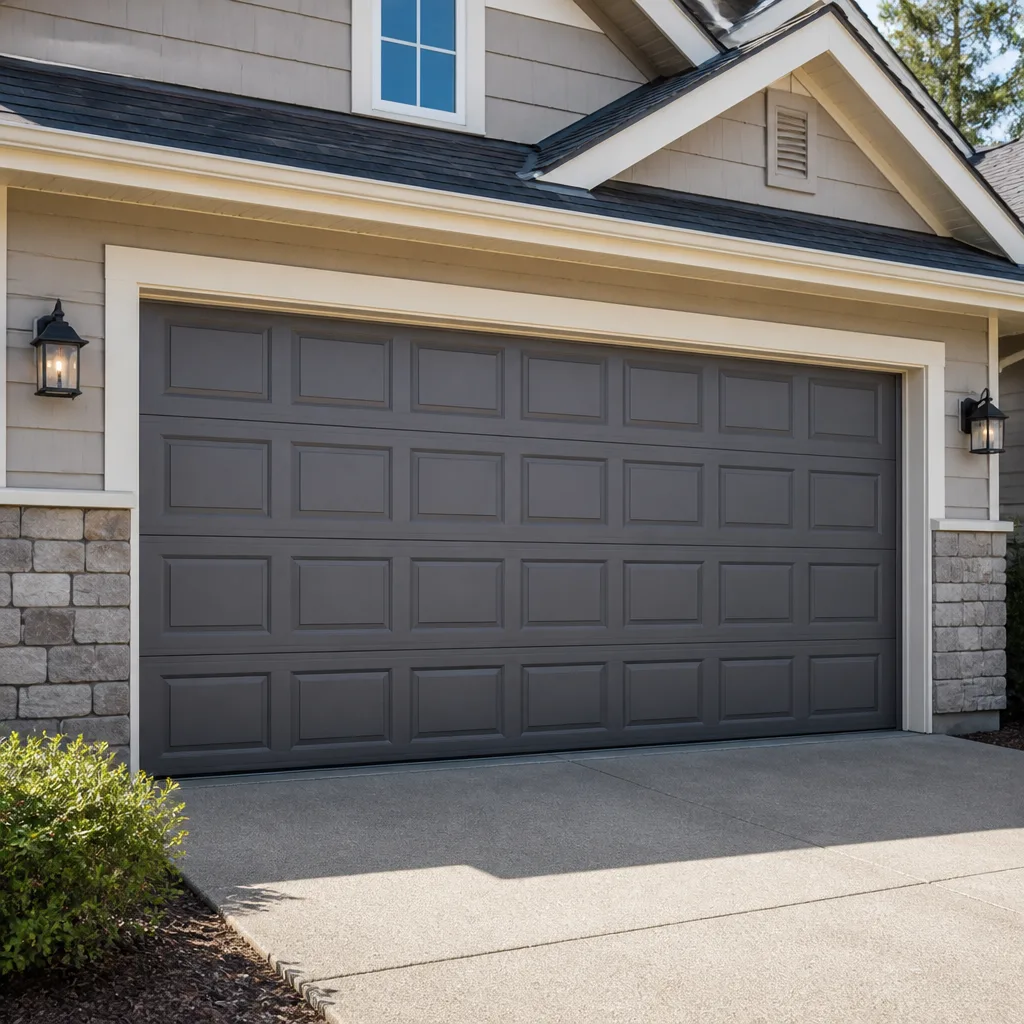 Raised-panel steel
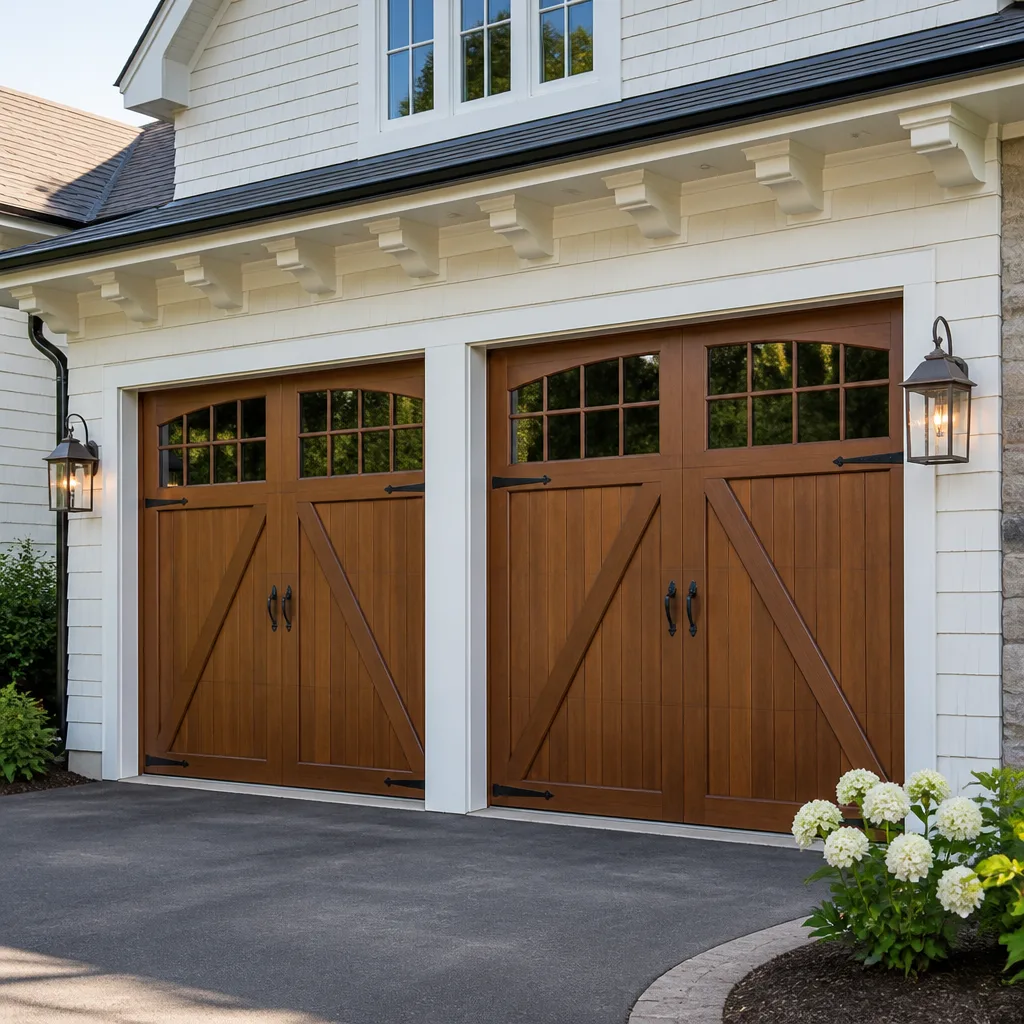 Carriage house
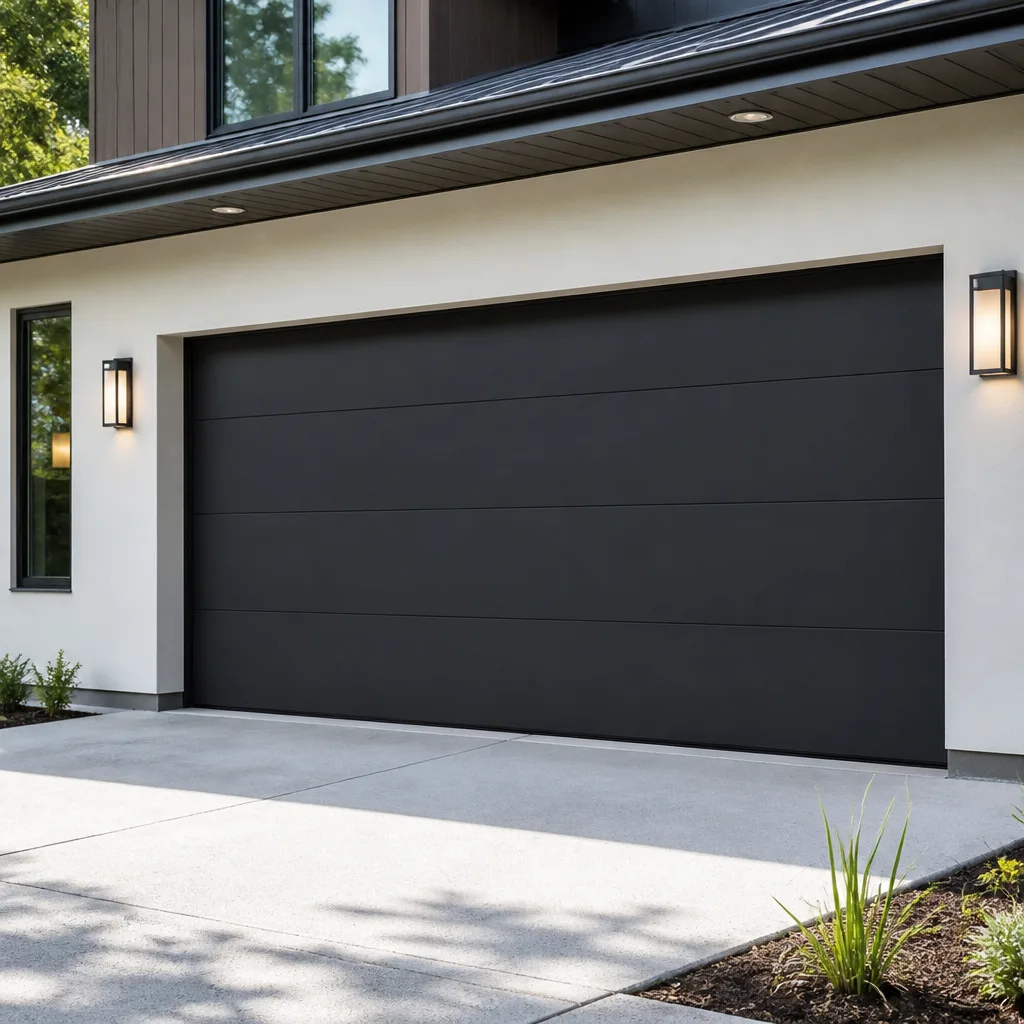 Modern flush
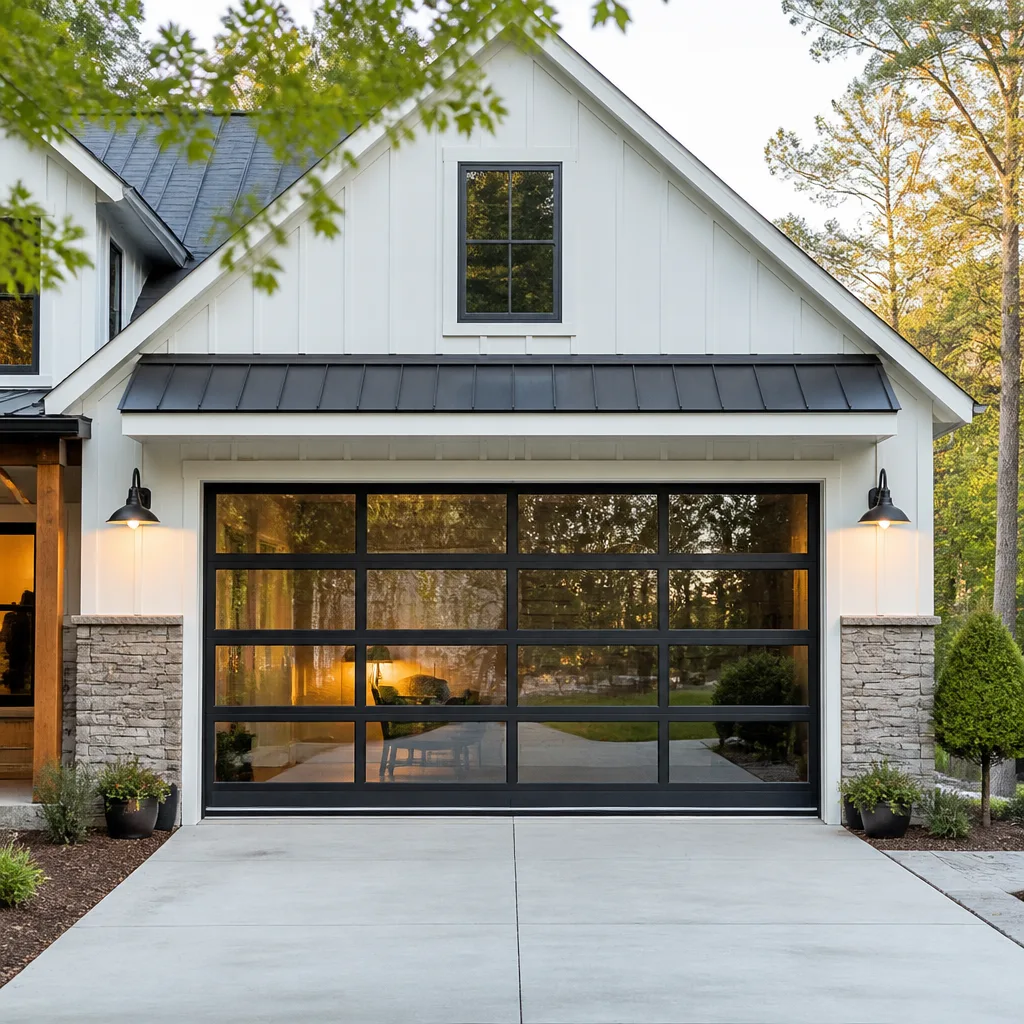 Full-view glass
 LiftMaster openers
 Chamberlain openers
Full 25-point door and opener safety check with every visit - springs, cables, rollers, tracks, and your LiftMaster or Chamberlain opener included
You get a price before we start. It does not change when the truck arrives.
Get your free estimateGarage Door Repair Troubleshooting in Evergreen: Common Problems and How to Fix Them
Here’s a truth most homeowners in Evergreen discover the hard way: the number-one cause of a “dead” garage door isn’t a burned-out opener motor. It’s a displaced safety sensor, which usually costs nothing to fix and takes about 90 seconds once you know where to look. Yet most people never check, and they end up scheduling a service visit for something they could have resolved before finishing their morning coffee. This guide walks you through a symptom-first diagnostic method, so you know whether you’re dealing with sensors, springs, tracks, or the opener itself before you touch anything. And just as important, it tells you which jobs to leave alone entirely.
Quick Answer
Garage door troubleshooting in Evergreen starts with matching the symptom to the component: a door that won’t move at all usually points to the opener or sensors, a door that reverses mid-travel points to sensor misalignment or track friction, and a door that’s heavy to lift manually points to a failed spring. About a third of the calls we see could have been solved at home in under ten minutes, but the dangerous stuff, including torsion springs and cables, should never be a DIY project.
Styles & brands we work with
- Raised-panel steel
- Carriage house
- Modern flush
- Full-view glass
- LiftMaster openers
- Chamberlain openers
Table of Contents
- Start Here: Run the Symptom Check Before Anything Else
- The Three Mechanical Culprits Behind Most Evergreen Garage Door Problems
- Why Evergreen’s Temperature Swings Mimic Opener Failure
- Sensor Problems: The 90-Second Fix Most People Miss
- Two Safe Tests Any Homeowner Can Run
- Hard Stops: When DIY Becomes a Safety Liability
- How to Describe Your Problem Precisely When You Call a Tech
- Opener Trouble vs. Mechanical Trouble: How to Tell Them Apart
Start Here: Run the Symptom Check Before Anything Else
Before you pick up a wrench or start pressing buttons, stop and observe exactly what the door does. Each behavior maps to a different part of the system, and guessing wrong wastes time. In our 13 years working on garage doors in Evergreen, we’ve learned that an accurate ten-second observation beats twenty minutes of guesswork.
Here is the diagnostic tree we walk our own customers through:
- Door does absolutely nothing when you press the remote or wall button. Check the power source first. Is the opener plugged in? Did a breaker trip? Then check the manual release cord hanging from the opener rail. If it got pulled by accident, the opener will run but the door won’t move. This is the most common “dead door” scenario and takes under a minute to identify.
- Door starts to move, then reverses back up. This is the safety sensor system doing its job, or a travel limit setting that needs adjustment. Sensors are covered later in this guide.
- Door moves partway and stops, usually with a grinding or straining sound. Something in the track or roller system is binding. Look for debris, a bent track, or a wheel that has jumped the rail.
- Door moves, but slowly and noisily. Could be worn rollers, dirty tracks, or an opener motor working harder than it should. In Evergreen’s dry season, dust buildup on tracks makes this worse.
- Door opens fine but closes poorly. Often a misaligned sensor or a closing force setting that’s too low.
- You hear the opener running, but the door doesn’t move. The opener’s drive gear or belt/chain has likely failed, or the emergency release is disconnected.
Write down which of these six behaviors matches yours. When you call a technician, that single observation will save an entire diagnostic cycle.
The Three Mechanical Culprits Behind Most Evergreen Garage Door Problems
Strip away the electronics and the smart-home integrations, and every garage door repair call we run in Evergreen comes down to one of three mechanical systems: springs, tracks, or sensors. Openers get blamed for a lot of problems they didn’t cause.
Springs do the heavy lifting. A standard double-car garage door weighs between 250 and 400 pounds. The opener is not designed to lift that weight alone. The springs offset it, so the opener only handles a fraction of the load. When a spring breaks, the door suddenly becomes extremely heavy, and the opener either refuses to lift it or strains audibly. A broken torsion spring often makes a sound like a gunshot when it snaps, and you’ll see a visible gap in the coil above the door.
Tracks guide everything. Evergreen sits in a climate where daytime and nighttime temperatures can swing 30 degrees or more, especially in spring and fall. Metal tracks expand and contract with those swings. Over time, that movement loosens bolts and shifts alignment. A track that’s off by a quarter inch can cause rollers to bind, doors to stick, and sensors to throw false readings.
Sensors protect everything. Since 1993, every garage door opener sold in North America has been required to include an automatic reverse system triggered by photoelectric sensors. Those two small units sit about six inches off the floor, one on each side of the door opening. They send an invisible beam across. If the beam breaks, the door refuses to close and reverses. They cause more no-charge service fixes than any other component.
We work on doors and openers from every major brand, including Amarr, Wayne Dalton, Craftsman, and Raynor, and the failure patterns are remarkably consistent across all of them. A Clopay door with a broken spring behaves the same way as a Raynor door with a broken spring. The brand doesn’t change the physics.
Why Evergreen’s Temperature Swings Mimic Opener Failure
Evergreen has a mild climate by most standards. Winters are temperate, and the extreme cold that plagues other parts of the country isn’t a concern here. But what Evergreen does have is a pronounced diurnal temperature range, the difference between the daytime high and the overnight low. In the transitional seasons, that spread can be significant.
Here’s why that matters for your garage door. The steel tracks, bolts, and brackets that guide your door expand when they heat up during the day and contract when they cool at night. Over months and years, that repeated movement works fasteners loose. A track that was perfectly plumb last summer may be slightly shifted by March. When the track shifts, the rollers drag, the door moves unevenly, and the opener’s force sensor detects the added resistance. The result looks exactly like an opener that’s failing: the door reverses for no reason, stops mid-travel, or runs in jerky movements.
The difference is this: track alignment problems get worse with temperature change, while opener problems stay consistent regardless of the weather. If your door only acts up when the temperature shifts quickly, suspect the track. If it acts up every single time, more likely the opener or a sensor.
We also see dust accumulation on tracks during Evergreen’s dry months. The dust mixes with whatever light grease remains on the rollers and forms a paste that adds friction. A quick inspection of the track for a brown or gray coating can confirm this.
Sensor Problems: The 90-Second Fix Most People Miss
The most common reason a garage door won’t close, the one that costs nothing to fix, is a misaligned safety sensor. The two sensor units near the floor depend on a precisely aimed beam. If one gets bumped by a broom, a trash can, or even a bicycle tire, the beam misses, and the door interprets that as an obstruction. The opener’s light usually flashes, but most people don’t notice that signal.
Here’s the diagnostic sequence we recommend, in order:
- Look at the sensors. Each has a small LED light. One glows green, one glows red or amber. If either is off, or if the green one is blinking, the beam is not aligned or power is interrupted.
- Remove anything between them. Boxes, garden tools, anything sitting in the path of the beam near the floor.
- Wipe the lenses. Dust and spider webs are common in Evergreen garages. A dry cloth is fine.
- Check if a sensor got knocked sideways. The bracket may be loose. Gently nudge the sensor until the LED returns to steady. If the bracket is bent or cracked, it needs replacement.
- Check the wiring. Look for a loose wire at the back of each sensor. A wire that got pulled by a shovel or a car bumper will break the circuit.
If none of that restores the beam, the sensor itself may have failed. That’s a straightforward replacement, and the parts are widely available. But in most cases, the problem is mechanical misalignment, not electronic failure. The brand of opener, whether it’s a LiftMaster, Chamberlain, Genie, or Craftsman, doesn’t change this basic setup, because the sensor technology is standardized.
Two Safe Tests Any Homeowner Can Run
Before you decide whether to fix something yourself or call a pro, there are two tests that tell you a great deal about the health of your door. Both are safe if you follow the steps exactly. Neither involves touching the springs.
Test 1: The Manual Disconnect Pull
- Close the door completely.
- Find the red emergency release cord hanging from the opener rail. It’s usually within arm’s reach of a stepladder.
- Pull the cord down and toward the door. This disconnects the opener carriage from the door. You’ll see the carriage separate.
- Now lift the door by hand using the handle or the bottom edge. It should move smoothly with moderate effort. A balanced door feels heavy but manageable, and it stays in place about halfway up when you release it.
- If the door slams down, or if you can barely lift it, the springs are not doing their job. That’s the most important piece of information you can gather.
- Reconnect the door to the opener by pulling the release cord again and running the opener until it re-engages, or by locking the release mechanism back into place according to your opener’s manual.
Test 2: The Balance Test
With the door still disconnected from the opener, lift it to three positions: knee height, chest height, and about three-quarters of the way up. Release it at each position. A properly balanced door stays put at each point. If it drifts down, the springs are losing tension. If it shoots up, the springs are over-tensioned. Either condition shortens the life of your opener, because the opener has to fight the imbalance on every cycle.
These two tests take five minutes total and answer the question: is this a spring problem or an opener problem? If the springs fail the test, do not attempt to adjust them. That’s a conversation for a specialist. If the springs pass, the issue is likely in the opener, the tracks, or the sensors, and those are often simpler fixes.
Hard Stops: When DIY Becomes a Safety Liability
There is a line every homeowner should draw, and it’s not about skill. It’s about physics and stored energy. Certain components on a garage door are under extreme tension at all times, and an amateur attempt to adjust or replace them is one of the leading causes of serious home injury in the United States. In Evergreen, where many homes have older doors still running original hardware, these components fail regularly.
These are hard stops. Do not attempt these repairs yourself:
- Torsion springs. These sit above the closed door on a metal shaft. They are wound under enormous tension. If a winding bar slips during adjustment, it releases that energy instantly. This is the component most likely to cause severe injury during a DIY repair. Call a professional.
- Extension springs. These run along the horizontal tracks on either side. When one breaks, the broken ends can snap back violently. Never stand in the path of a spring while the door is in operation.
- Lift cables. The steel cables that run from the bottom of the door up to the spring assembly. When a cable frays and snaps, it whips with enough force to cut through clothing and skin. If you see rust, frayed strands, or a cable hanging loose, close the door if it’s already down and leave it alone.
- Bent tracks with the door still attached. The door is under spring tension. Removing a track while that tension is active is dangerous. A pro will secure the door and release tension before touching the track.
- Bottom brackets. These hold the cables to the bottom corner of the door. They are bolted under load. If one is pulling away from the door, the cable could release at any moment.
We work on every major brand across these systems, Amarr and Wayne Dalton doors included, and the safety considerations are universal. The brand of door doesn’t make the spring safer to touch. When one of these components fails, the right move is to leave the door alone, keep children and pets away from the area, and call a specialist.
How to Describe Your Problem Precisely When You Call a Tech
When you call Ashton Garage Door Repair, the more precisely you describe the symptom, the more likely our first visit ends in a fix rather than a diagnostic appointment and a return trip. Here’s what we listen for, and what you should note before you pick up the phone.
Six things to tell the technician:
- What the door does or doesn’t do. “It won’t move at all” is different from “it moves two feet and reverses.” Use the symptom tree from earlier in this guide.
- What you hear. A bang, a grinding sound, a whirring with no movement, or silence. Each noise points somewhere specific.
- When it started. Did it fail suddenly, or has it been getting worse for weeks? Gradual decline often means worn rollers or weakening springs. Sudden failure means a broken component.
- What you’ve already tried. If you ran the manual disconnect test or adjusted the sensors, tell us. It saves time.
- The door’s brand if you know it. A Raynor door with a Craftsman opener tells us what parts to expect. But if you don’t know, that’s fine too.
- Any recent work done on the door or the garage. New flooring, a new car, even a new storage rack near the tracks can be relevant.
We answer 24/7. Fast dispatch from 7am to 7pm, Sunday through Friday. When you call, the person on the line will ask these same questions, and having your answers ready means the tech who arrives already knows what parts to bring.
Opener Trouble vs. Mechanical Trouble: How to Tell Them Apart
This is the question that determines whether your problem is a garage door opener repair or a mechanical door issue, and it saves everyone money when the answer is clear. Here’s the practical difference.
An opener problem lives in the motor unit, the drive mechanism, the circuit board, the remote, or the wall console. A mechanical problem lives in the springs, cables, rollers, tracks, hinges, or the door panels themselves.
Signs of opener trouble:
- The motor runs, but the door doesn’t move. The drive gear or belt has failed.
- The door moves only a few inches and stops. The opener’s force limits may be set too low, or the travel limits are wrong.
- The remote works intermittently, or the wall button works but the remote doesn’t. Electronic or frequency problem.
- The door reverses immediately after touching the floor. The close force setting is too sensitive, or the travel limit is off.
- The opener hums but nothing happens. Capacitor or motor failure.
Signs of mechanical trouble:
- The door is extremely heavy to lift when disconnected from the opener. Failed spring.
- The door jerks or catches on the way up. Bent track or worn roller.
- You see a visible gap in a torsion spring. Broken spring.
- The door hangs crooked or sags to one side. Cable or spring imbalance.
- You hear grinding from the track area, not the opener. Debris or damaged roller.
Your door, your brand, our specialty. We work on LiftMaster, Chamberlain, Genie, Clopay, Amarr, Wayne Dalton, Craftsman, and Raynor systems, and the diagnostic split between opener and mechanical is the same across all of them. The important thing is to identify which half of the system is failing before you spend money on parts for the wrong one.
What Evergreen Homes Have in Common When Doors Fail
We’ve been serving Evergreen since 2013, and there are patterns to how garage doors in this area fail. Homes here tend to be older, with original garage door hardware still in service. That means spring failures are more common than opener failures, because springs are wear items with a finite lifespan measured in cycles, and many Evergreen doors have far exceeded their rated cycle count.
The soil in this area also matters more than people expect. Some parts of Evergreen sit on expansive or shifting ground, which can cause garages to settle slightly over the years. A garage floor that’s tilted just a few degrees changes the geometry of the door opening, and the tracks and weather seals have to compensate. If your door has started binding on one side only, and you can see a dip in the slab near the center, settling may be the underlying cause.
We also see a lot of opener units that were installed when the home was built and have never been updated. Units from the early 1990s lack modern safety features, and their plastic drive gears are well past their intended life. If your opener is older than your car and it’s been making noise for a while, a conversation about repair versus replacement is probably overdue. Repair or replace, we’ll tell you which one actually makes sense for your situation.
Mixed-Brand Systems: Why They Confuse Homeowners and What to Do
A lot of homes in Evergreen have mixed-brand setups: a Raynor door with a Craftsman opener, or an Amarr door with a LiftMaster unit that was swapped in during a previous repair. That’s normal. Doors and openers are independent systems, and they can be mixed without issue. But when something fails, homeowners sometimes call the door brand for help, only to be told the opener is the problem, or vice versa. And they end up frustrated.
This is where a brand-agnostic specialist changes the equation. One technician can examine the door’s mechanical components and the opener’s electronics in a single visit, because it’s all one system. From the spring to the smart opener, the diagnosis doesn’t depend on which name is on the sticker. We work on Clopay doors with Genie openers, Wayne Dalton doors with Chamberlain openers, and everything in between.
If you don’t know what brand your door or opener is, look for a model plate. On doors, it’s usually on the inside edge of the bottom panel or on the end stile. On openers, it’s on the side or back of the motor housing. If the plate is missing or worn off, don’t worry. We identify parts by measurement and configuration, not by label.
Common Mistakes to Avoid
- Pressing the remote repeatedly when the door doesn’t move. Each press resets the opener’s diagnostic cycle. Press once, observe, then diagnose. Repeated presses can overheat the motor on older units and turn a minor issue into a burnout.
- Lubricating the tracks. Tracks should stay clean and dry. Grease or oil on the tracks attracts dust, and in Evergreen’s dry months that becomes a grinding paste. Lubricate the rollers’ ball bearings and the hinges instead.
- Tightening every bolt you can reach. Some bolts on a garage door are set at specific tensions, especially on the opener bracket and spring hardware. Cranking them down can strip threads or misalign the track.
- Adjusting the travel limit screws at random. Those small dials on the opener control how far the door travels. Turning them without a baseline measurement often makes the door worse, not better.
- Replacing the opener before checking the door balance. A new opener won’t fix a broken spring. If the door is heavy by hand, the spring is the problem, and the opener was just the victim.
- Ignoring a noisy door for months. Noise is the first sign of wear. A door that grinds today may fail entirely next week, and a spring that snaps without warning is the kind of failure that traps a car in the garage.
- Fixing the symptom instead of the cause. A door that reverses might be a sensor, or it might be a track that’s out of alignment and tripping the sensor. Clearing the beam fixes the symptom. Fixing the track fixes the cause.
See the difference
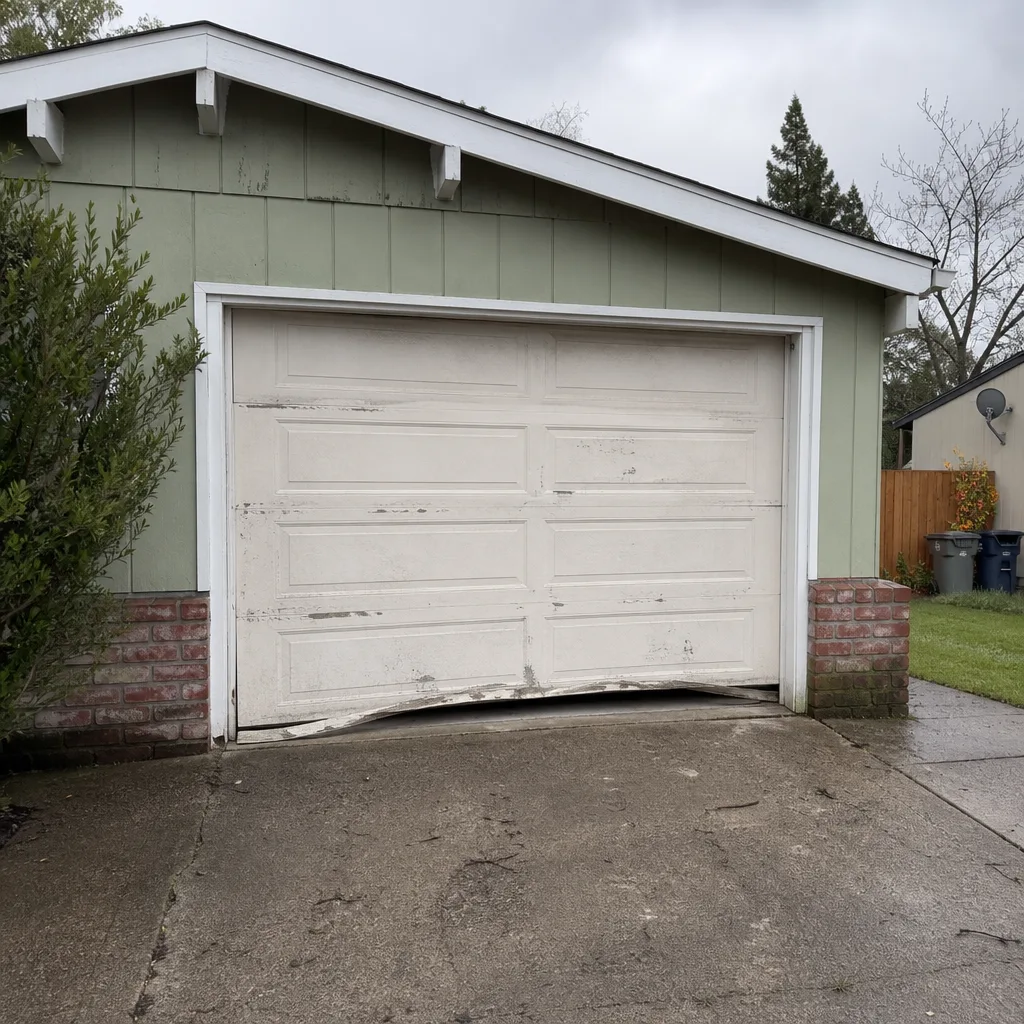 Before
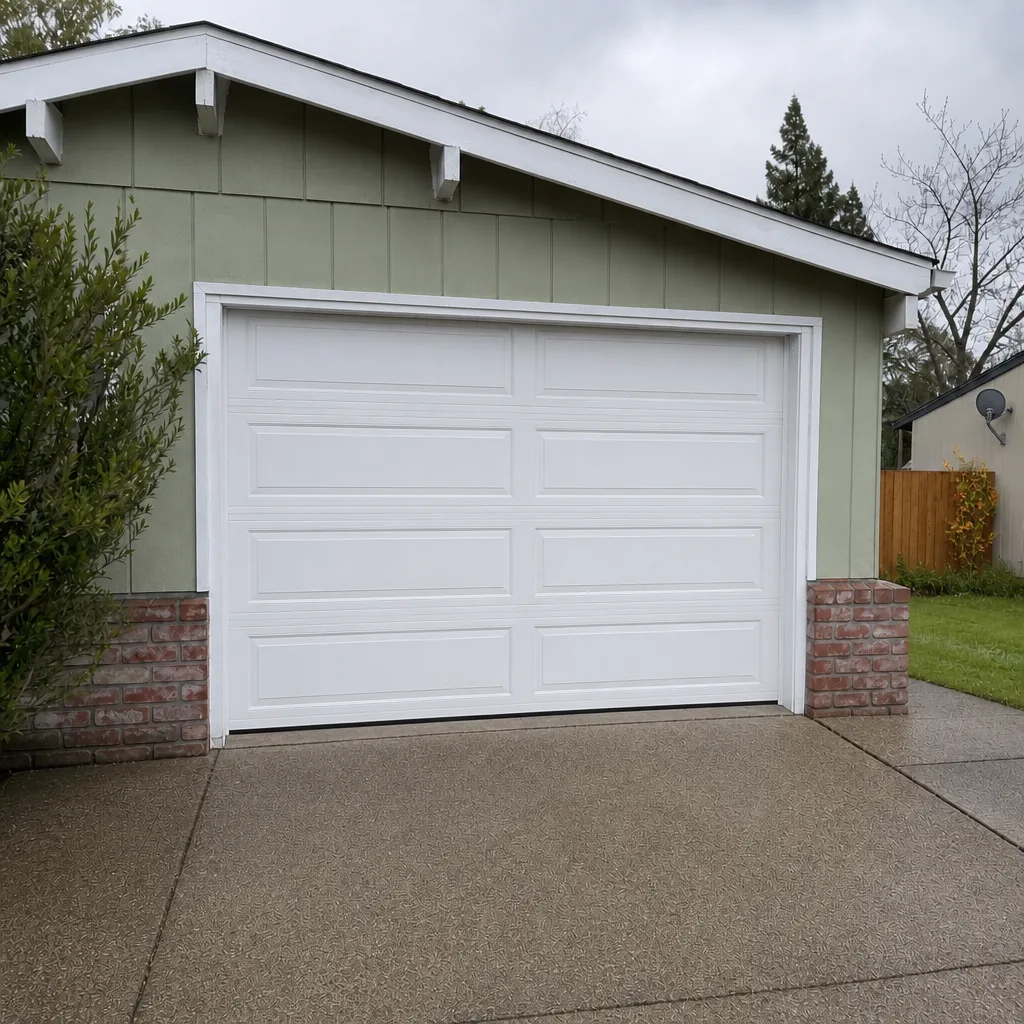 After
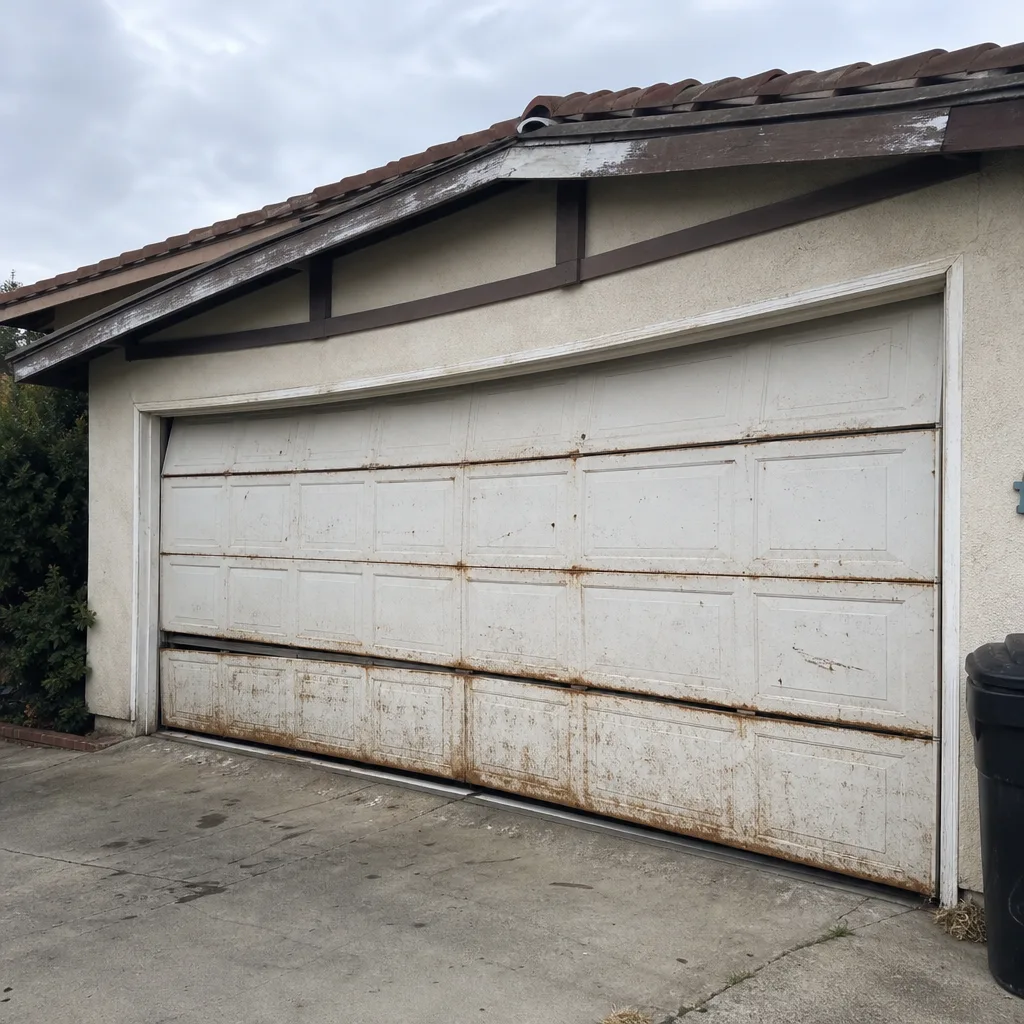 Before
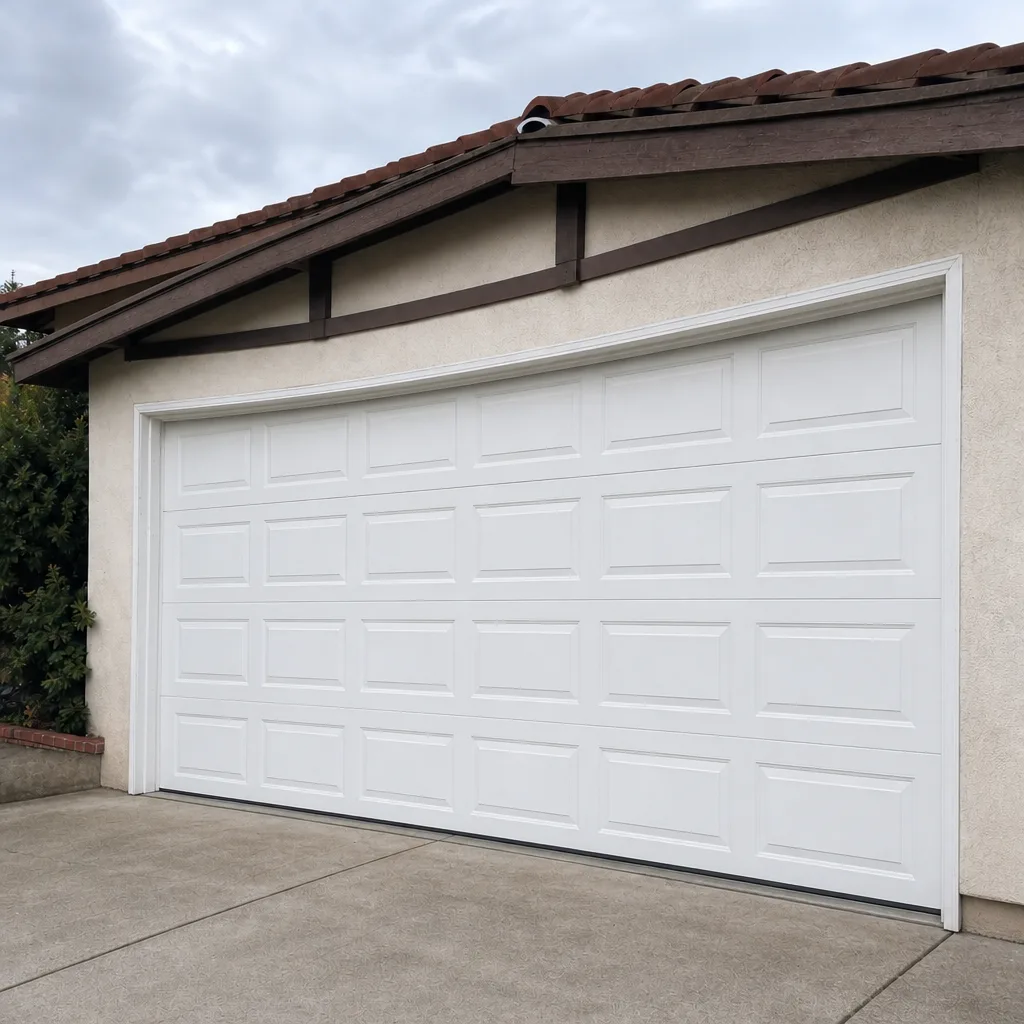 After
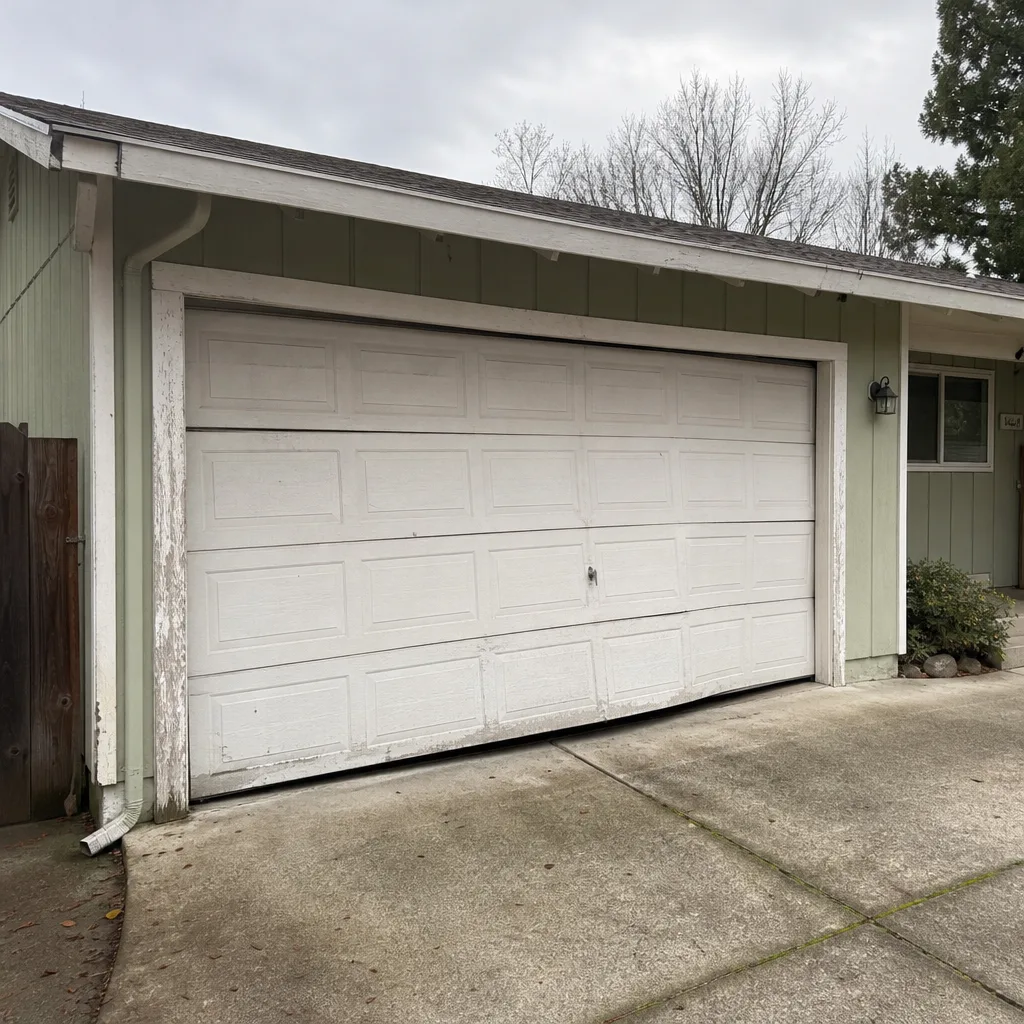 Before
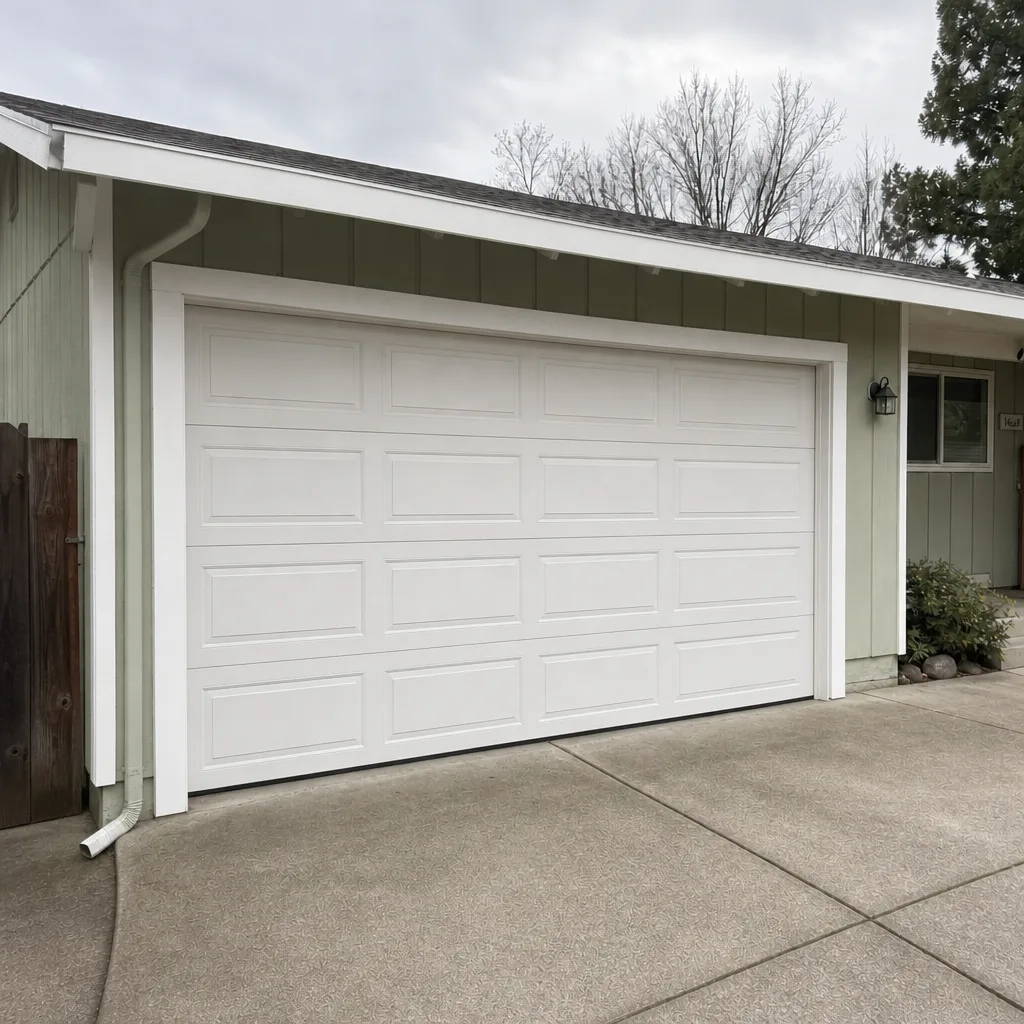 After
When to Call a Professional
If your door fails the balance test, if you see a broken spring or a frayed cable, if the track is visibly bent, or if you’ve tried the sensor fixes and the door still reverses, stop there. These are not the moments for another YouTube tutorial. Torsion springs hold enough energy to cause serious injury in an instant. Cables under load can whip through the air when they snap. A specialist arrives with the right tools, the right parts, and the training to do the job without turning a repair into an emergency.
Ashton Garage Door Repair offers free estimates in Evergreen. Call (833) 400-0995. We answer 24/7. Fast dispatch from 7am to 7pm, Sunday through Friday. One call covers the whole door.
Frequently Asked Questions
The most common reason is a misaligned or dirty safety sensor near the bottom of the tracks, which breaks the invisible beam and tells the door to reverse. Check that both sensor LEDs are lit, wipe the lenses, and make sure nothing is blocking the path. If the sensors are clear, suspect a track alignment issue, which is common in Evergreen because seasonal temperature swings cause metal tracks to shift.
The price depends entirely on the component and the specific repair, and it’s set per job by the written estimate after a technician sees the door. Sensor fixes and simple adjustments tend to be on the lower end, while spring replacement and opener replacement are larger jobs. We quote every price up front before any work starts, and estimates are free.
Yes, in most cases. We answer 24/7 and dispatch technicians from 7am to 7pm, Sunday through Friday. Garage door springs and cables are regular parts we stock, so a technician can often complete the repair in one visit. Call (833) 400-0995 and describe the symptom, and we’ll tell you what to expect.
That’s almost always the safety sensor system doing what it’s designed to do. If the beam between the two sensors is blocked or misaligned, the door will open normally but refuse to close. Clean and realign the sensors first. If that doesn’t solve it, the closing force setting on the opener may be too low, or a track issue is causing the safety reverse to trigger.
No. Torsion springs are wound under enough tension to cause serious injury or death if they release while you’re working on them. Extension springs and lift cables carry the same risk. This is the one repair where the cost of a professional is not optional. Leave the door alone and call a specialist.
Almost certainly yes. We work on LiftMaster, Chamberlain, Genie, Clopay, Amarr, Wayne Dalton, Craftsman, and Raynor systems, covering virtually every make a homeowner in Evergreen likely has. Your door, your brand, our specialty. We repair and install doors and openers across the full range, from entry-level to premium.
The Bottom Line
Most Evergreen garage door problems are simpler than they look from the driveway, and a symptom-first approach separates the ten-minute fixes from the genuine repair calls. Check the sensors, run the manual disconnect and balance tests, and know where the hard line is with springs and cables. When the problem is beyond the safe DIY zone, describe it precisely and call someone who works on every major brand. From the spring to the smart opener, the faster the right diagnosis, the faster the door goes back to doing its only job: opening and closing without a second thought.
Written by the team at Ashton Garage Door Repair, serving Evergreen since 2013.