
Last updated November 4, 2026
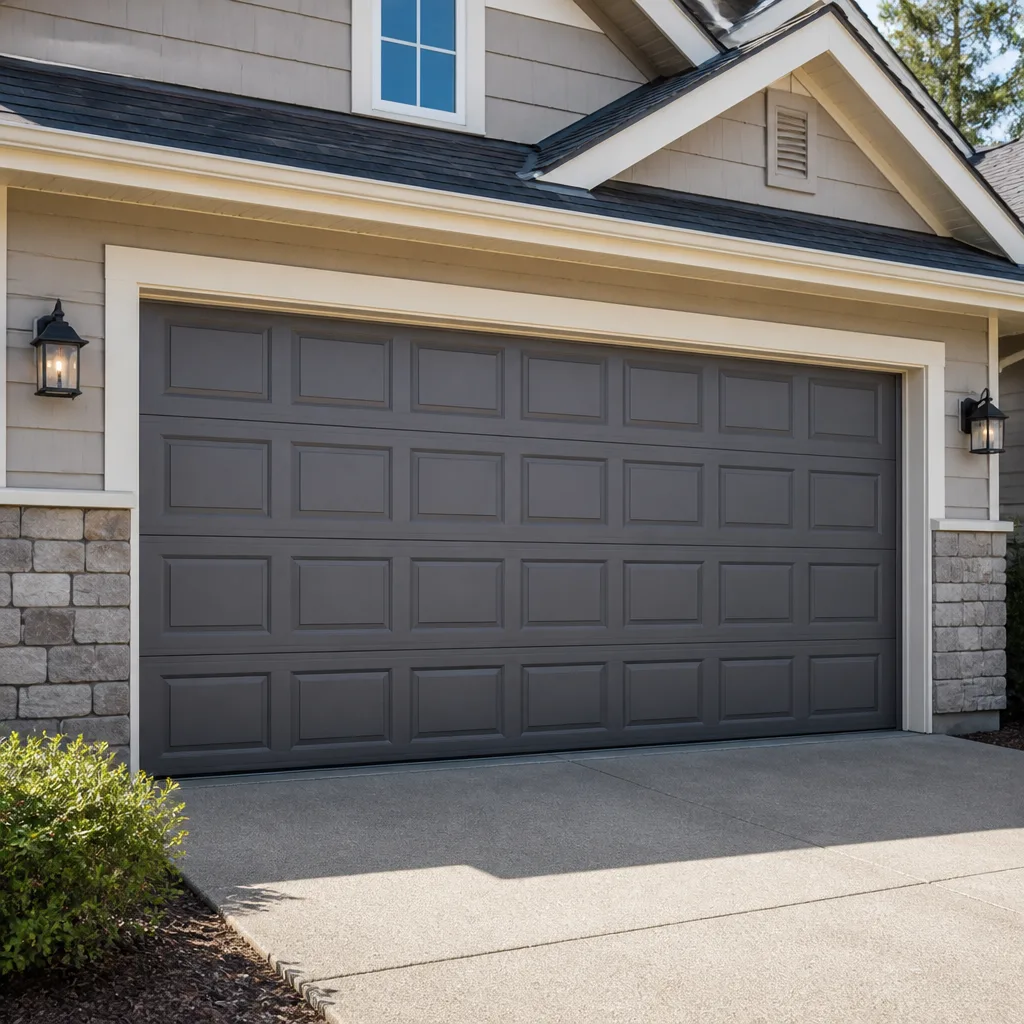 Raised-panel steel
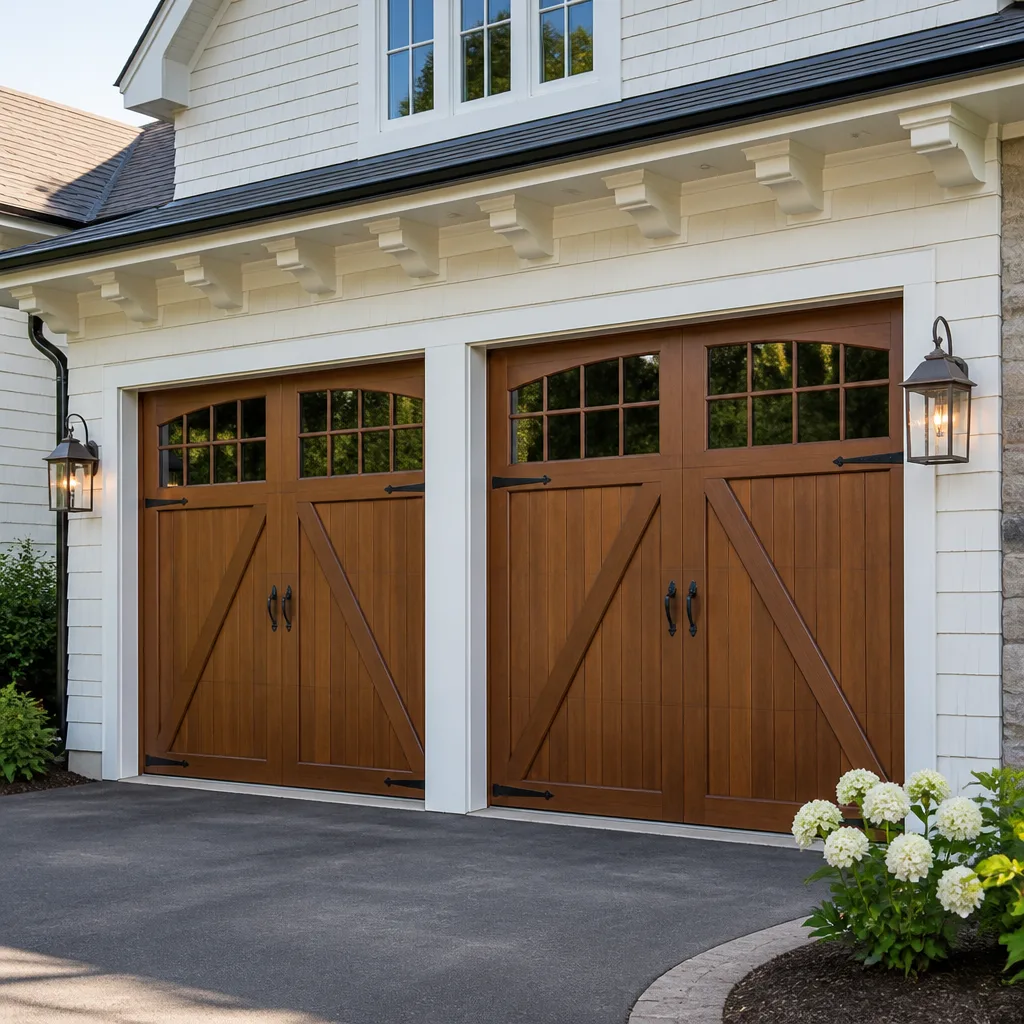 Carriage house
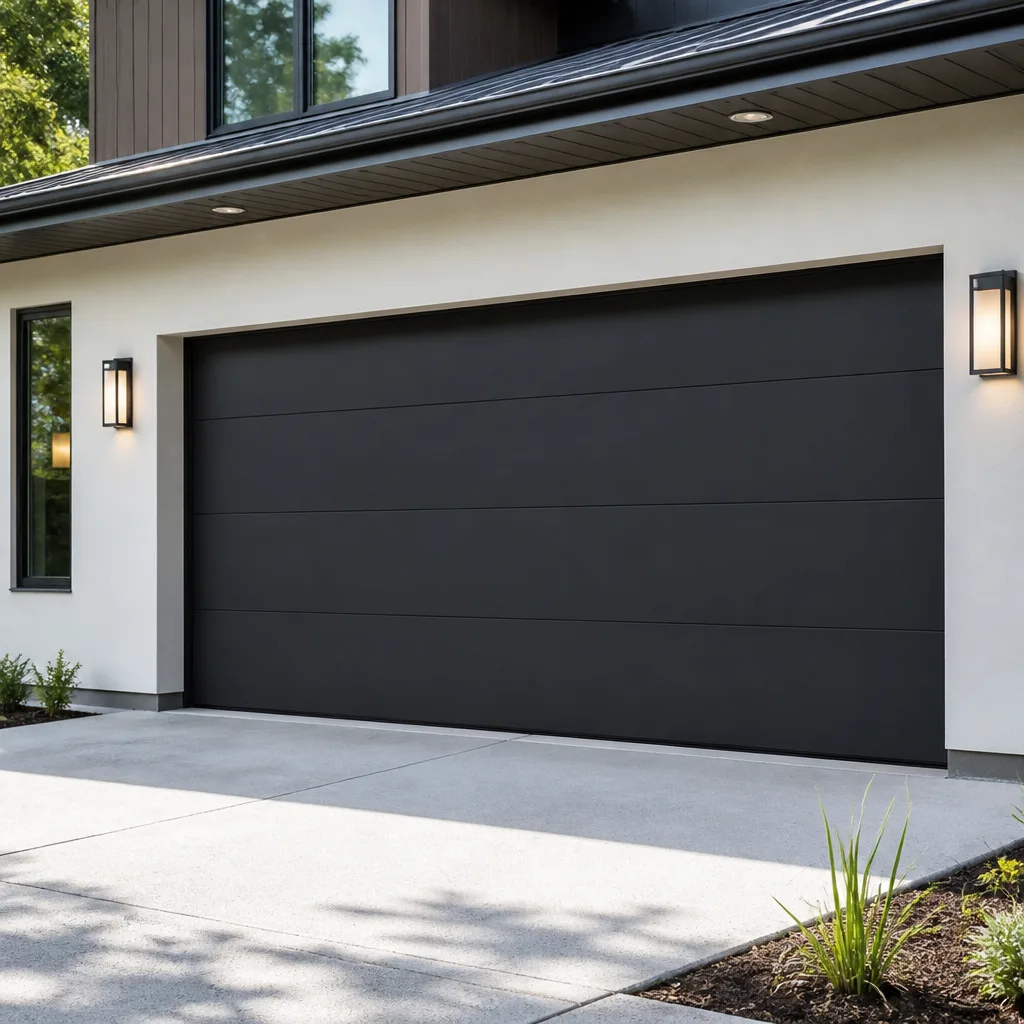 Modern flush
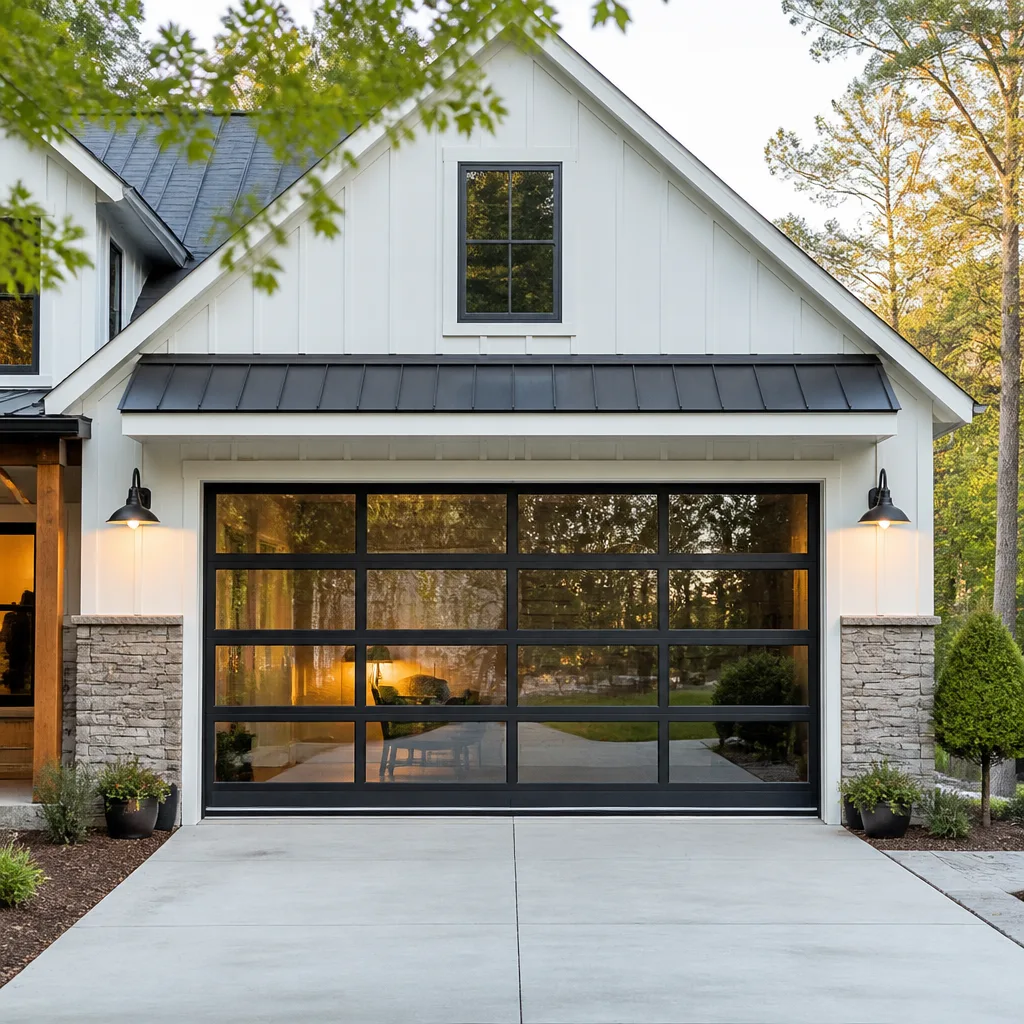 Full-view glass
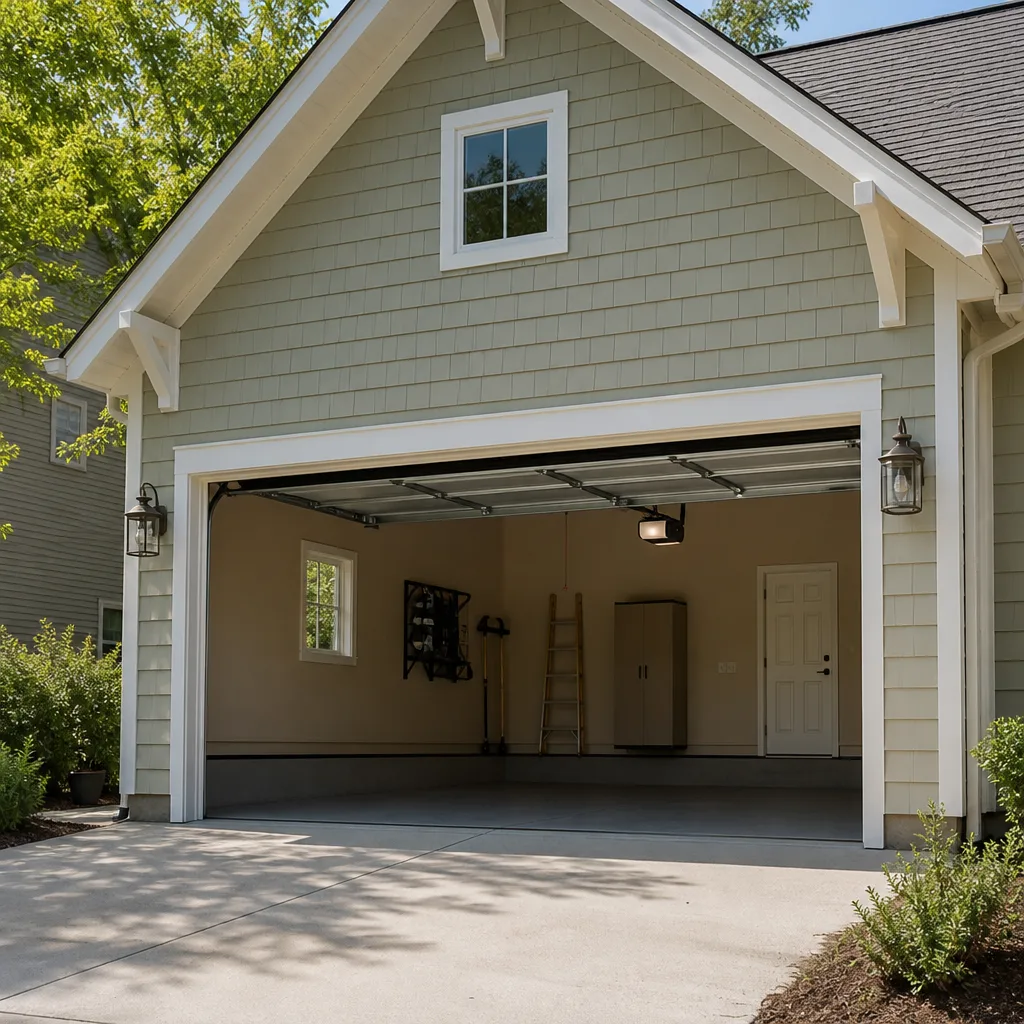 LiftMaster openers
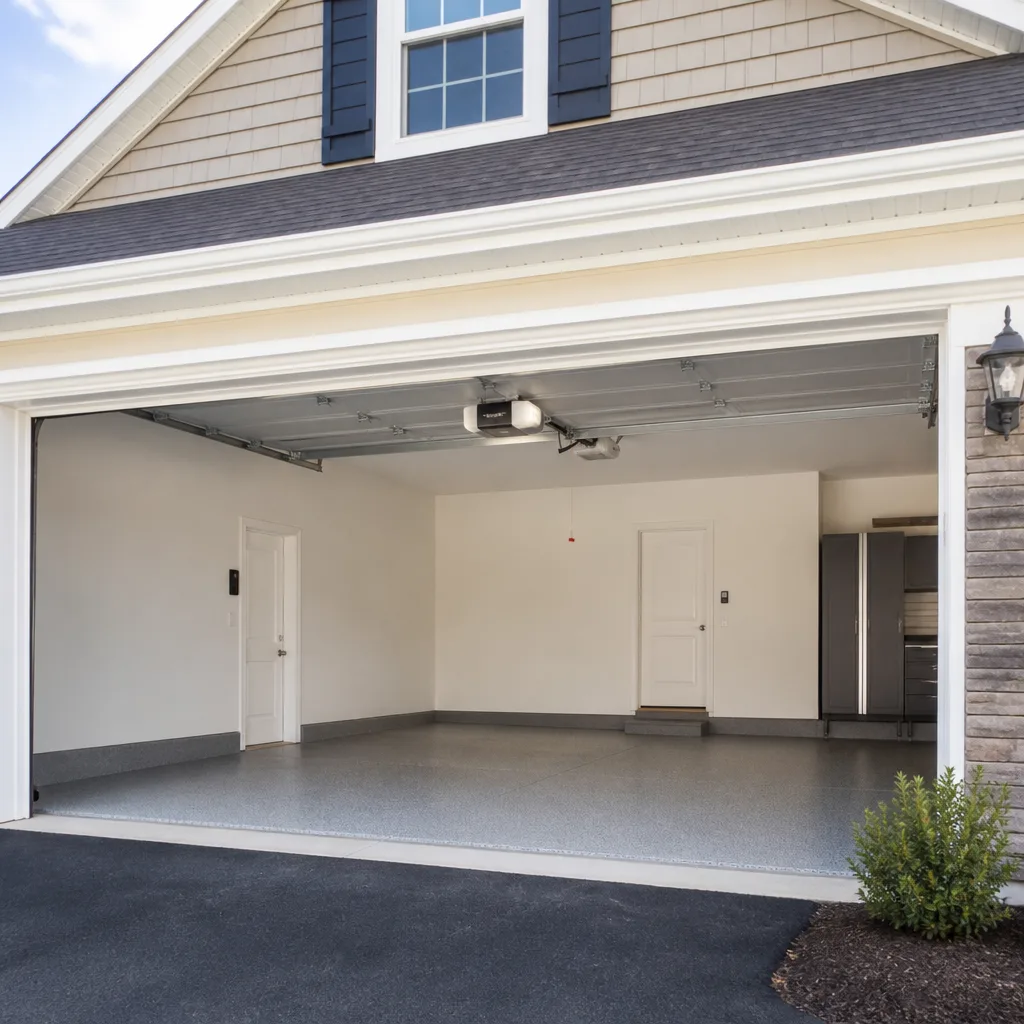 Chamberlain openers
Full 25-point door and opener safety check with every visit - springs, cables, rollers, tracks, and your LiftMaster or Chamberlain opener included
You get a price before we start. It does not change when the truck arrives.
Get your free estimateHow to Hire a Garage Door Contractor in Evergreen: A Step-by-Step Guide
The most expensive garage door job most Evergreen homeowners will have is the second one: the repair call to fix what a low-bid generalist got wrong the first time. A garage door is a heavy, spring-loaded system that gets used multiple times a day, and whether you live off San Felipe Road or near the golf course, a contractor who doesn’t understand how torsion springs, opener electronics, and panel weight interact can turn a $200 repair into a $700 replacement and a week of headaches. This guide is built to help you filter out the wrong contractors before they ever touch your door. You’ll learn the questions that expose DIYers and handymen pretending to be specialists, how to read a quote line-by-line, and what a written scope of work must include before you hand over a deposit. It’s written from an Evergreen perspective, for the specific housing stock and garage setups that dominate this part of San Jose.
Quick Answer
To hire a garage door contractor in Evergreen, verify garage-door-specific expertise before anything else, then check local reputation and proper insurance, then get a written quote that itemizes parts and labor separately and never exceeds the agreed amount. The right contractor can name the differences between major brands like LiftMaster and Chamberlain, services both doors and openers, and puts a scope of work in writing before any deposit changes hands. Most quality garage door work in Evergreen is scheduled a day or two out, and a credible company offers a free estimate and stands by its written price.
Styles & brands we work with
- Raised-panel steel
- Carriage house
- Modern flush
- Full-view glass
- LiftMaster openers
- Chamberlain openers
Table of Contents
- Why Filtering Matters More Than Price Shopping
- The Five Questions to Ask Before a Contractor Visits
- Why ‘Licensed and Insured’ Is a Floor, Not a Credential
- How to Read a Quote Line-by-Line
- Red Flags in Door and Opener Brand Expertise
- What a Written Scope of Work Must Include
- Garage Door Work in Evergreen: Climate, Codes, and Market Realities
Why Filtering Matters More Than Price Shopping
Most homeowners start a contractor search by calling three companies and asking what the job costs. That’s backward. What you should be doing first is eliminating generalists, out-of-area crews, and unqualified solo operators, because the price difference between a competent garage door specialist and a handyman with a truck is rarely more than 15 to 20 percent on a repair, and the risk of paying twice is concentrated entirely in the cheaper option. A generalist who does plumbing on Monday and drywall on Wednesday will diagnose your door by swapping parts until something works. A garage door specialist knows the system well enough to identify the actual failure in one visit.
In Evergreen, this filtering step matters more than in many other San Jose neighborhoods. The housing stock here runs from 1970s ranch styles to newer hillside builds, and the doors attached to those homes range from original wood panels to modern Clopay steel with smart openers. A contractor who only sees two or three door brands a month cannot develop the pattern recognition that separates a failing opener logic board from a misaligned sensor, or a tired extension spring from a failing torsion spring. Filtering is the work of choosing a specialist, and it should happen before you ever ask for a number.
The other reason filtering comes first is that garage door repair is a repeat-business trade. A contractor who does good work in Evergreen will be here for years, and the company’s reputation compounds. Ask for referrals from neighbors on Nextdoor or your local community group. Drive through your own neighborhood and notice which trucks you see repeatedly. The contractor who shows up with a branded vehicle, a clean uniform, and a phone number connected to a real local business is already past the first filter.
The Five Questions to Ask Before a Contractor Visits
These five questions take about four minutes total on the phone, and the answers will eliminate most of the wrong contractors before they ever walk through your garage.
- What brands of doors and openers do you service regularly? A specialist should answer without hesitation and name at least four or five. If they say “all brands” and can’t be specific, that’s a non-answer. Genuine fluency sounds like: “We work on LiftMaster, Chamberlain, Genie, Clopay, Amarr, and most others.” A handyman says: “Whatever you’ve got, we can handle it.”
- Do you repair openers, or just the mechanical door? A contractor who only does springs and cables is not a full garage door contractor. Openers are half the system. If they can’t diagnose a Chamberlain opener circuit board or a failing Genie drive gear, you’ll be hiring a second company for half the job.
- Are you licensed and do you carry workers’ compensation insurance? In California, garage door contractors must hold a C61/D28 specialty license from the Contractors State License Board. If the answer is vague, hesitant, or dismissive, end the call.
- Do you charge for estimates? Reputable garage door companies in Evergreen offer free estimates. A contractor who wants a fee just to look at the door is either trying to monetize the visit or doesn’t expect to win your business on merit.
- Will you put the final price in writing before starting work? The answer must be an unqualified yes. If a contractor says “we’ll figure it out as we go” or “it depends on what we find,” that’s a red flag. A professional diagnoses the problem, quotes the fix, and sticks to the number.
One thing to remember: these questions work because they are cheap to ask and expensive to fake. A generalist can buy a magnetic truck sign, but he can’t fake a fluent conversation about Wayne Dalton torque specs or a Raynor track profile. The questions are filters, and the filters work before the quote ever arrives.
Why ‘Licensed and Insured’ Is a Floor, Not a Credential
Every legitimate garage door contractor in Evergreen will tell you they’re licensed and insured. That phrase appears on every website, every truck, every business card. It’s the minimum to operate legally in California, not a signal of competence. The real question is what sits on top of that floor.
A C61/D28 license from the CSLB proves the contractor passed a trade exam and carries a bond. It does not prove the contractor has ever successfully replaced a torsion spring on a Clopay door in an Evergreen home built in 1998. It does not prove the contractor understands the difference between a LiftMaster belt drive and a Chamberlain chain drive, or why that difference matters for the noise level in a master bedroom over the garage. Licensing is table stakes. You need to look past it.
Garage-door-specific certifications are a stronger signal. Manufacturer training programs and industry certifications, such as those offered through the International Door Association, indicate that a technician has studied door balancing, spring sizing, and opener force settings. A contractor whose training is documented is more likely to follow manufacturer torque specifications on a torsion spring than one who learned by watching YouTube and hoping for the best. When you ask about credentials and the contractor starts talking about license numbers but can’t name a single brand training program, that tells you something.
Insurance matters for a different reason: risk transfer. If a worker is injured on your property, workers’ compensation coverage protects you from liability. If the contractor’s insurance lapsed, you could be on the hook. Ask for a certificate of insurance and verify it’s current. Most legitimate contractors will send it without hesitation. The ones who stall are the ones you don’t want on your property.
A garage door company in Evergreen that has survived the local market is also a credential in itself. San Jose and its Evergreen district are competitive, and the drive-time between job sites kills inefficient operators. A company that’s been answering the phone here for a decade or more has proven it can deliver enough quality to survive on referrals, not just paid ads.
How to Read a Quote Line-by-Line
A well-written quote is itemized, specific, and leaves nothing to chance. It should break out parts and labor separately, name the brand and model of every component being installed, and state the total price in clear numbers. Here’s what to look for line by line.
Labor as a single vague line item. If the quote says “Labor: $450” without explaining what that labor covers, you can’t compare it to another quote that specifies spring replacement, track adjustment, and opener re-programming as separate tasks. Vague labor bundling hides markup and prevents comparison. The fix is to ask for a breakdown: what specific tasks does the labor line include?
Parts without brand names or model numbers. “New spring” is not a quote. “Pair of 243 torsion springs, 0.2187 wire diameter, 2-inch inside diameter” is a quote. Without the specification, you cannot verify that the contractor is replacing like-for-like, and you can’t tell whether you’re getting a $40 spring or a $120 spring. We see this all the time in Evergreen: a quote that says “garage door opener: $350” without naming the model. Is it a Chamberlain B970 with battery backup, or a no-name import? Ask for the exact make and model.
The total, and only the total. If the quote gives you one number and no line items at all, that’s a red flag. It means the contractor doesn’t want you to see the math. It almost always hides either a padded labor charge or cheap parts marked up to premium prices. A specialist is proud to show you the components, because the components are the proof of quality.
Additional work discovered after the quote. Some contractors quote low to win the job, then find “unexpected problems” once the door is apart. A legitimate contractor diagnoses thoroughly before quoting, because the diagnosis is the job. If the quote includes language about possible additional work, ask for the exact conditions under which that work would be needed and the exact pricing for it. If they won’t put it in writing, walk away.
Warranty terms. The quote should state what’s covered and for how long: parts, labor, or both. A spring with a 10,000-cycle rating has a real lifespan, and a written warranty on the spring plus the labor to install it is the mark of a contractor who stands behind the work. If the quote doesn’t mention warranty, ask. If the answer is “we guarantee our work” with nothing in writing, that’s not a warranty.
Red Flags in Door and Opener Brand Expertise
Here’s a test you can run on the phone in thirty seconds. Ask the contractor: “What’s the difference between a LiftMaster and a Chamberlain opener?” A real specialist will tell you that both are made by the same parent company, the Chamberlain Group, but they’re sold through different channels: LiftMaster through professional installers, Chamberlain through retail. A LiftMaster unit typically carries a heavier-duty rail and a longer factory warranty, while a Chamberlain is designed for the do-it-yourself market. The answer shows the difference between a parts-replacer and a systems thinker.
A generalist will stumble. He might say “they’re basically the same thing” and leave it at that, or he’ll change the subject. That’s a disqualifier. If a contractor cannot explain the product lines of the two most common opener brands on the market, he almost certainly cannot diagnose a failing logic board or a stripped drive gear. He can swap parts. He cannot solve problems.
The same test applies to doors. Clopay and Amarr are the two biggest steel door manufacturers in North America, but their product lines are structured differently. A Clopay door often uses a specific hinge and roller system, while an Amarr door has different panel profiles and often different spring requirements. A contractor who services both regularly can tell you which one holds up better in the dry heat of an Evergreen summer. A contractor who says “a door’s a door” has never balanced a 16-foot Wayne Dalton by its old TorqueMaster spring and discovered it’s no longer made.
Brand-agnostic repair capability is the thing you’re trying to verify. An Evergreen homeowner with a 2004 Raynor door and a Craftsman opener has a mixed-brand system that a one-brand installer will fumble. The right contractor services all eight of the most widely installed brands: LiftMaster, Chamberlain, Genie, Clopay, Amarr, Wayne Dalton, Craftsman, and Raynor. That’s the difference between a specialist and a guy with a truck.
What a Written Scope of Work Must Include
Before any deposit changes hands, you need a written scope of work. Not a text message, not a verbal promise, not a one-line invoice that says “repair door.” A scope of work is a document that describes exactly what the contractor will do, what parts they’ll use, and what the finished job looks like. Here’s the specific language that protects you.
- Exact parts with brand and model. “Replace both torsion springs with two 0.225-inch wire diameter springs rated at 20,000 cycles, brand: [name].” If the brand isn’t specified, write it in before signing.
- Specific labor tasks. “Remove old springs, install new springs, balance door, lubricate all hinges and rollers, test door balance by hand, program opener travel limits, test safety reverse.” Every task you’re paying for should be listed.
- What’s included in the price. “Disposal of old parts, cleanup of work area, final walkthrough with homeowner.” If cleanup is not stated, it is not promised.
- Total price and payment schedule. “Total: $X. Deposit: $Y. Balance due upon satisfactory completion.” The deposit should be reasonable; the balance should not be due until the door operates correctly.
- Warranty statement. “Springs warranted for 5 years parts and labor. Opener warranty per manufacturer: 1 year parts, labor not included.” The warranty must be in writing, with dates and coverage limits.
- Change order policy. “Any additional work outside this scope will be quoted separately and approved in writing before proceeding.” Without this sentence, a contractor can add work and bill you later.
A scope of work takes ten minutes to prepare and it protects both sides. It tells you exactly what you’re buying, and it tells the contractor exactly what’s expected. In our experience, the contractors who resist putting scope in writing are the ones who have had disputes with past customers. The contractors who welcome it are the ones who do what they say.
Garage Door Work in Evergreen: Climate, Codes, and Market Realities
Evergreen is an inland district in the eastern foothills of San Jose, which means garage doors here live a different life than doors in coastal towns like Santa Cruz or Pacifica. There’s no salt air to corrode hardware, and no marine layer to keep temperatures mild year-round. Instead, Evergreen doors face dry, warm summers with long stretch
es of heat that can accelerate wear on rubber seals and plastic components. Springs lose a fraction of their cycle life to heat expansion and contraction over the years, and opener electronics in attached garages can run hot in August. A contractor working in Evergreen understands that a garage door facing south and west takes more ambient heat, and that sun exposure on steel panels contributes to paint fade and adhesive breakdown around weatherstripping.
Hail is uncommon here. It happens occasionally, but it’s not the recurring seasonal threat it is in the Midwest or high desert. What Evergreen homeowners see more often is general storm and impact damage: a wind-driven branch hitting a panel, a baseball cracking a section, a car bumping the bottom panel in the driveway. The repair approach for impact damage is the same: assess the panel for structural integrity, check whether the door is still balanced, and decide whether a section replacement or a full door makes more financial sense
Permitting in Evergreen and the broader San Jose area is relatively straightforward. Most residential garage door replacements do not require a building permit, because the door is considered a replacement of an existing component rather than a structural change. But that’s a rule with local variations, and if you live in an HOA-managed neighborhood in Evergreen, your HOA’s architectural committee may have design restrictions on door style, color, and material before you can install anything. Ask your city’s building department if you’re unsure, and read your HOA’s covenants before you buy a door. A local contractor who has worked in Evergreen will know which neighborhoods have HOAs with strict rules and which ones don’t.
The market reality in Evergreen is that most homeowners are price-sensitive but quality-aware. This isn’t a neighborhood where people buy the cheapest possible option and accept the consequences. The homes are well-kept, the neighborhood is desirable, and a garage door is a visible part of the front elevation. The right contractor for this market is one who can repair when repair makes sense and recommend replacement when it doesn’t, without pushing an upsell. “Repair or replace, we’ll tell you which one actually makes sense” is not a tagline; it’s the standard a contractor should be held to.
One more local consideration: the convenience factor. Evergreen is a drive from just about everywhere in San Jose, which means an out-of-area contractor who needs three trips to finish a job has a real cost disadvantage against a contractor who knows the neighborhood and the houses in it. A company that regularly works the Evergreen area will schedule intelligently, dispatch a truck from close by, and finish the job in fewer visits. That’s not a mistake to accept; it’s a mark of whether the contractor belongs here or is just passing through.
Common Mistakes to Avoid
- Choosing the lowest bid without checking specialty. The low bid is often a generalist who will install a universal spring that doesn’t match the door’s weight, leaving it unbalanced and wearing out in two years instead of ten. In Evergreen, where the doors are used every day for cars and storage, a cheap spring is a false economy.
- Asking about price before asking about brand fluency. Price is the last question, not the first. If you ask about price first, you anchor on the number and ignore the expertise that determines whether the repair lasts. Speed matters, but so does getting the right diagnosis the first time.
- Accepting “we work on all brands” at face value. It’s a marketing phrase, not a capability statement. Pin them down: ask which brands they stock parts for, which openers they’ve repaired this week, and what brand they’d recommend for a new door. A vague answer is not an answer.
- Paying in full up front. A deposit for a special-order door is normal. Full payment before the work is done is a red flag in every trade. A legitimate contractor takes a deposit, does the work, and collects the balance on completion.
- Skipping the written scope of work. If it’s not in writing, it’s the contractor’s word against yours. The top regret we hear from homeowners who had bad experiences is that they accepted a verbal quote and had no documentation when the bill came in higher.
- Ignoring HOA rules. Evergreen has a number of HOA communities, and some of them regulate garage door colors and styles. Installing a door the HOA rejects means paying to reinstall a compliant one. Check before you buy.
- Choosing a contractor based on one five-star review. One review is a data point; a pattern of reviews over years is a record. Look for contractors with consistent feedback over time, not a single glowing write-up that could be from a cousin. Trust is earned on dozens of doors, not one.
See the difference
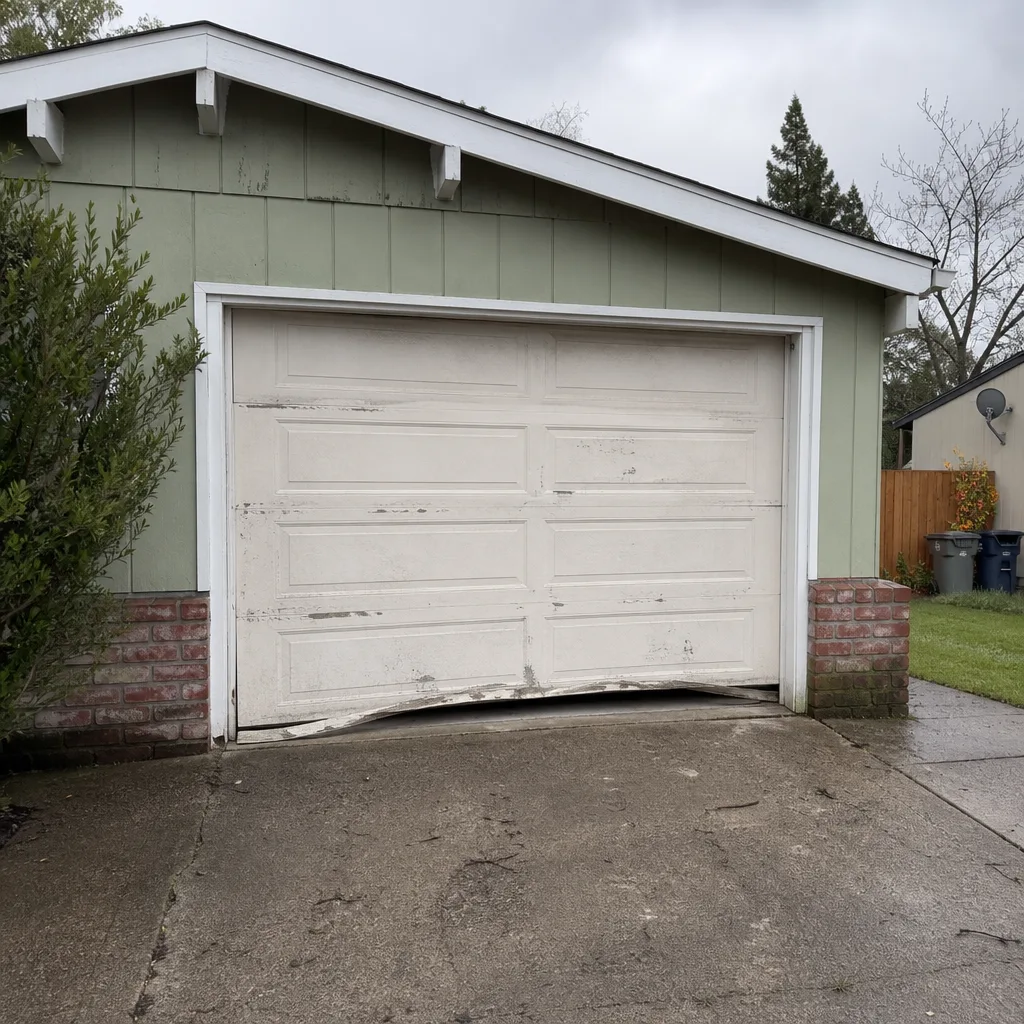 Before
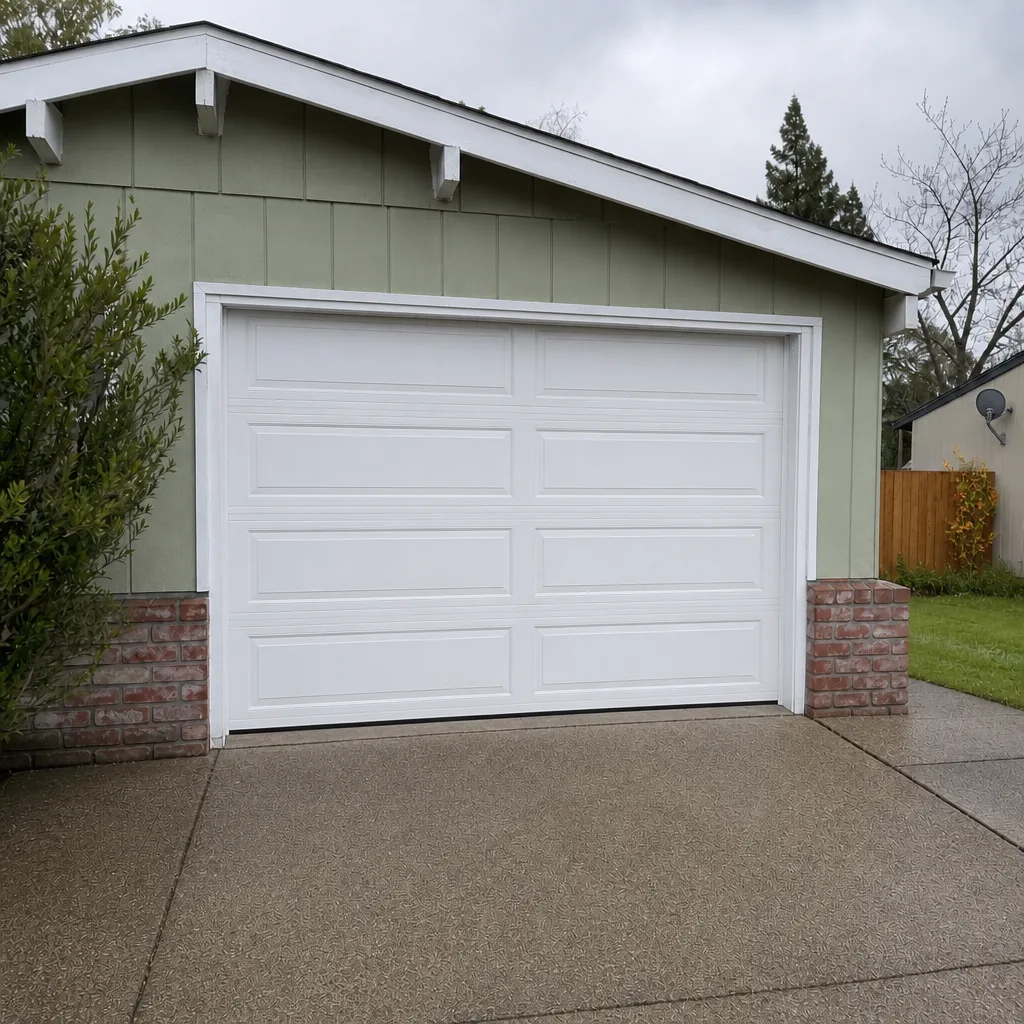 After
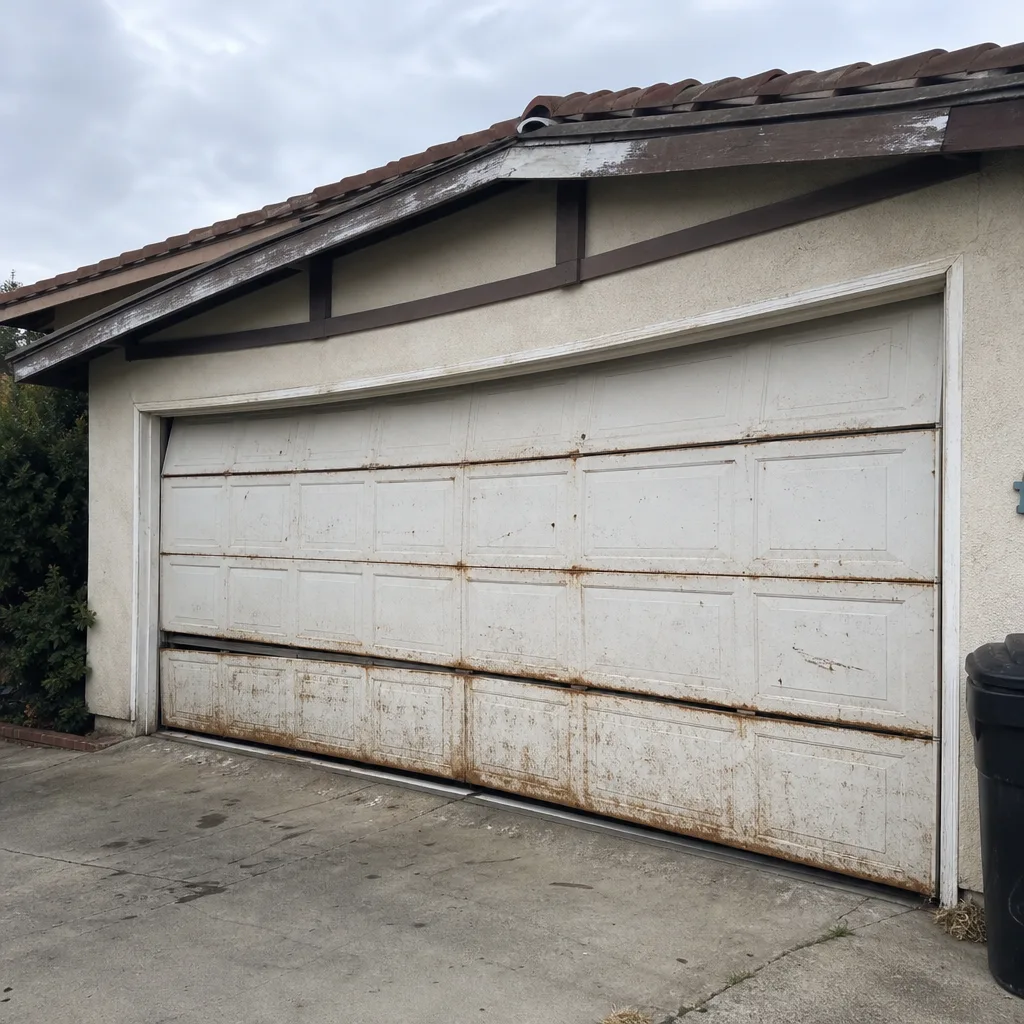 Before
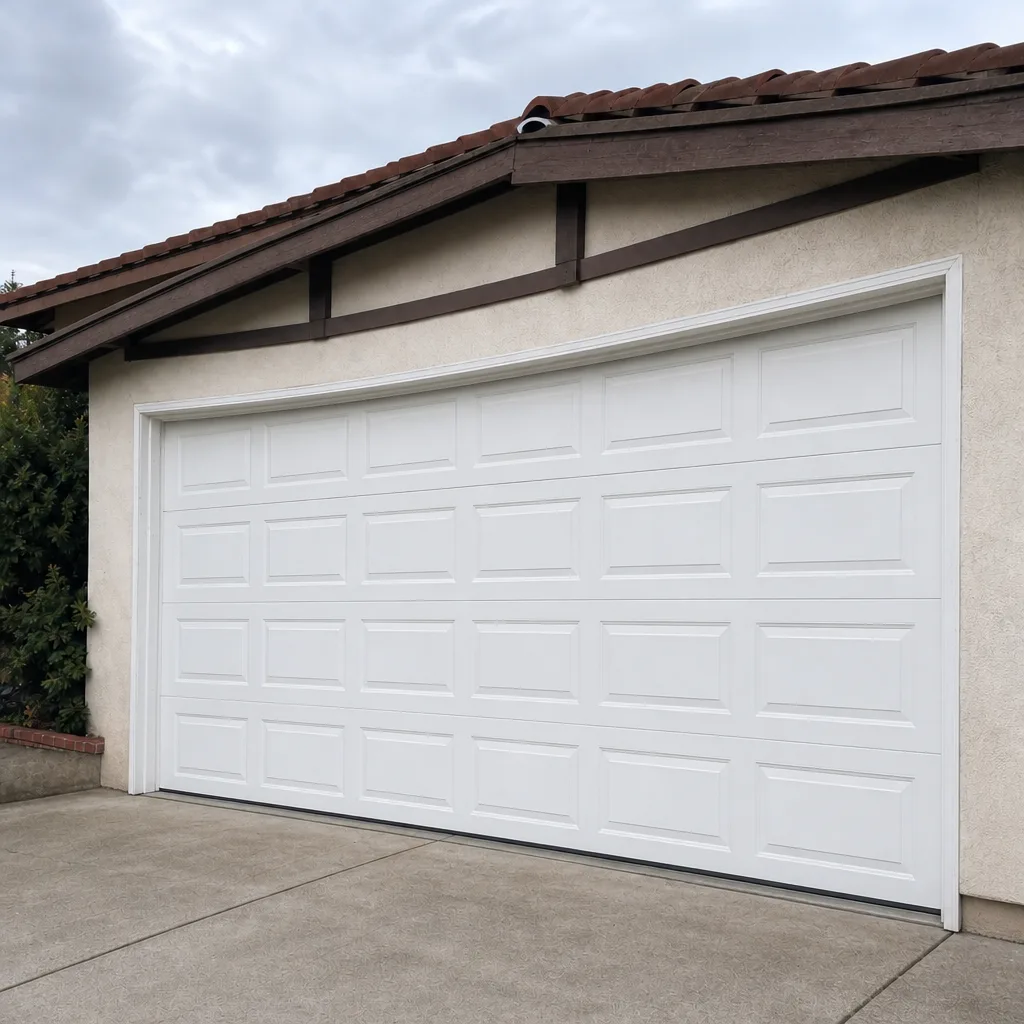 After
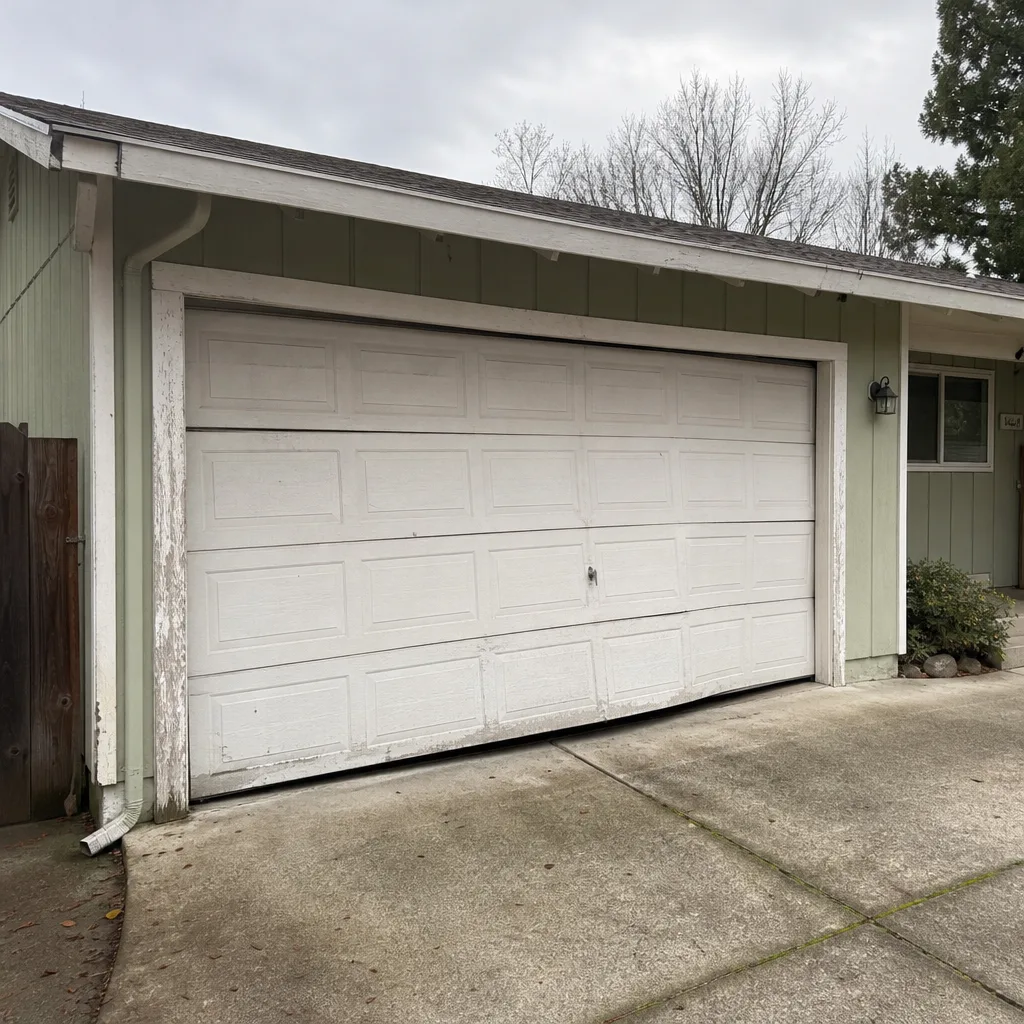 Before
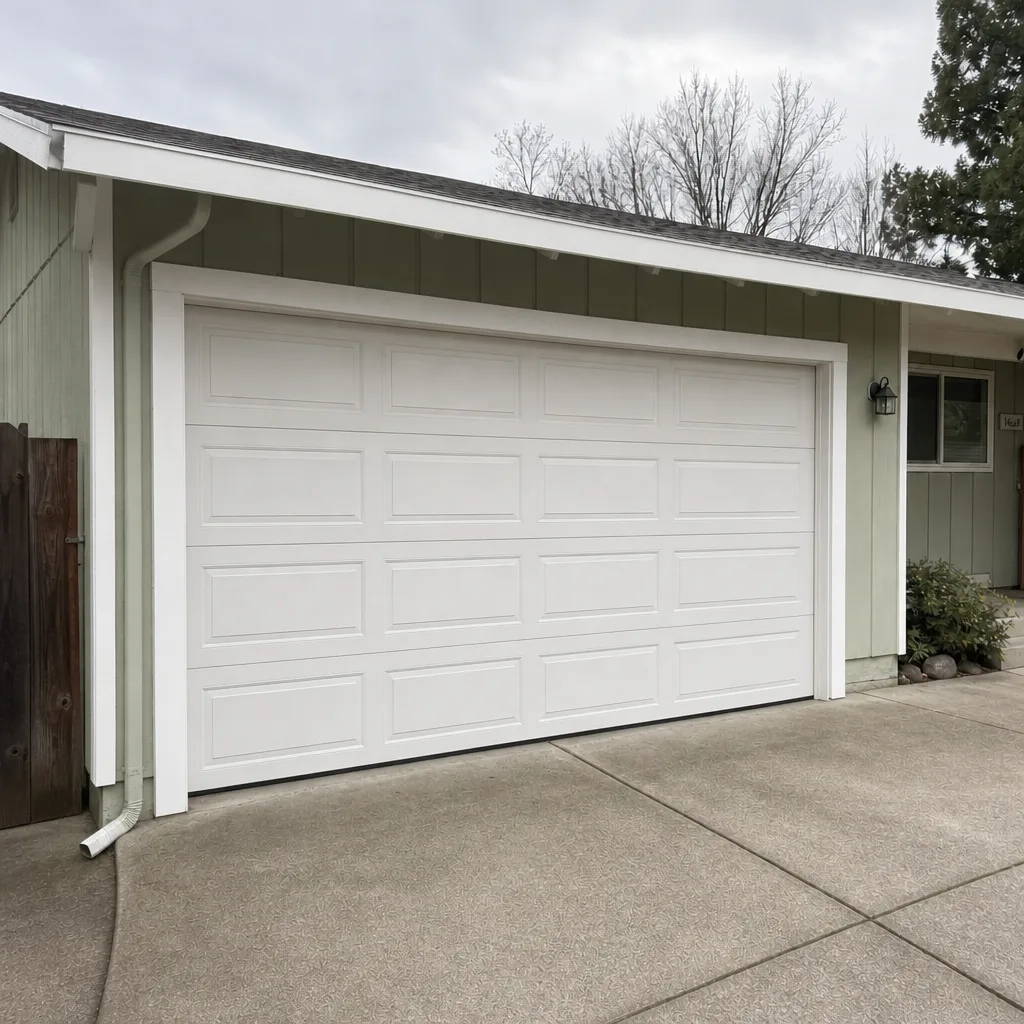 After
When to Call a Professional
A garage door is the largest moving part in your home and the most dangerous when it fails. You should call a professional immediately if the door is crooked in the tracks, if a cable is frayed or hanging loose, if the door jerks or shudders on the way up, or if the opener runs but the door doesn’t move. You should also call before attempting any work that involves torsion springs, which are under enormous tension and can cause serious injury if mishandled. The same goes for anything involving the open
er’s electrical wiring or the smart home integration panel. These are not weekend projects. The right move is to call someone who has serviced doors in Evergreen and understands the local housing stock, the local HOA rules, and the difference between a repair and a replacement.
Ashton Garage Door Repair offers free estimates in Evergreen. Call (833) 400-0995. We answer 24/7. Fast dispatch from 7am to 7pm, Sunday through Friday.
Frequently Asked Questions
Ask them to name the differences between major brands like LiftMaster and Chamberlain, or between a Clopay and an Amarr door. A specialist answers immediately and with specificity; a generalist hesitates and changes the subject. Also check whether they service openers as a named service, not an afterthought.
A credible quote itemizes parts by brand and model, separates parts from labor, lists the specific repair tasks, states the warranty terms, and gives a total price that is not exceeded. Vague language like “repair door” or “new opener” without specifics is a signal to ask for clarification or move on.
Most residential garage door replacements in San Jose do not require a building permit, but HOA communities in Evergreen may require architectural approval for door style, color, or material. Check with your city’s building department and read your HOA’s rules before scheduling the installation.
Yes, and a good one will tell you honestly which makes more sense. If the door is old, rusted through a panel, or the opener is failing while the door is dated, replacement may cost less over five years than patching problems. A specialist will walk you through the trade-offs without pushing an upsell, because the reputation in a neighborhood like Evergreen depends on honesty.
For standard repairs, most contractors do not require a deposit at all. For special-order door installations, a deposit covering the cost of materials is normal. Ask for a written scope of work before any deposit changes hands, and never pay the full amount before the job is complete and you’ve tested the door.
Ask what’s covered, for how long, and whether labor is included. A spring warranty is only useful if the labor to replace a failed spring is also covered. Get the warranty in writing, with dates, and ask what voids it. A contractor who can’t answer these questions cleanly may not have a real warranty at all.
The Bottom Line
Hiring a garage door contractor in Evergreen is a filtering job first and a shopping job second. Before you compare prices, eliminate generalists who can’t name the brands they service, confirm the contractor’s license and insurance, and demand a written quote with itemized parts and labor. Look for genuine brand fluency across doors and openers, because the contractor who can explain the difference between a LiftMaster and a Chamberlain is the one who will diagnose your door correctly the first time. Get the scope of work in writing before any money moves, and pay the balance only when the door works. Do that, and you’ll avoid the second repair call entirely. For garage door repair, opener repair, or full installation in Evergreen, call (833) 400-0995. We answer 24/7. Fast dispatch from 7am to 7pm, Sunday through Friday.
Written by the team at Ashton Garage Door Repair, serving Evergreen since 2013.